The Business JournalJul 11, 2005 8:05 a.m.
By Dan O’Brien
Two years ago, The Youngstown Historical Center -- best known to residents as the Steel Museum -- came dangerously close to suffering the same fate as the Mahoning Valley’s steel industry.
Instead of closing its doors, however, the facility is experiencing a new lease on life. Earlier this year the museum unveiled a new exhibit and officials expect that state funding for the Ohio Historical Society in Columbus – which operates the Youngstown center – will remain stable for the foreseeable future.
Moreover, Columbus has earmarked more funding to promote the facility and adopted a policy that allows sites to raise money independently to help pay for their operations and educational programs.
“The Historical Society is trying to make the sites more entrepreneurial,” says Nancy Haraburda, site manager at the Youngstown Historical Center. Before, any private contributions went into the society’s general fund and then were meted out among the 60 different sites throughout the state. “Now, people can make donations to a specific site, such as this one,” she says.
Stronger local support is precisely what the museum needs, Haraburda states. One of the biggest peeves she and others share is the overwhelming number of people in the community who have never visited the center and, consequently, have so many misconceptions about what it offers.
The rise and fall of steel in the Mahoning Valley is the focus of the center, Haraburda says, but it’s more useful to interpret the industry as a backdrop against a much more compelling story.
That story is the odyssey of the industrial worker during the 20th century, a theme evident as soon as the visitor steps inside the museum’s permanent collection, “By the Sweat of Their Brow: Forging the Steel Valley.” As the visitor walks in, he is greeted by a life-size mannequin of a steel worker fitted with protective glasses, a hard hat and industrial coveralls.
“We wanted to make sure that people know he is the most important part of the exhibit,” Haraburda says.
The collection occupies two floors filled with thousands of articles and artifacts related to industrial production – some from outside the Mahoning Valley. Tools forged from early iron manufacturing processes of the 18th century and early 19th centuries are on display, while methods of steel making during the 20th century are exhibited through videos and models. A pulpit from which workers monitored steel production was donated by LTV Steel.
A third floor is dedicated to archives on labor and industry. They consist of a library, company records, transcribed oral histories and microfilmed copies of local newspapers and workers publications.
In between is a tale of a sleepy frontier community that grew as Americans moved west and, in the 19th century, immigrants from Ireland, Germany, England, Scotland and Wales settled here as the iron and steel industry took root. By the first two decades of the 20th century, as immigrants from southern and eastern Europe joined the ranks of industrial workers, the Mahoning and nearby Shenango Valley emerged as the fifth-largest steel producing region in the world.
Smoke and soot was so ubiquitous that socialist labor leader Frank Bohn was prompted to write in 1915: “Everybody breathing dirt, eating dirt – they call it ‘pay dirt.’ For Youngstown, clean would be Youngstown out of work.” The quote, so prophetic in hindsight, is among several sayings interspersed throughout the exhibit.
Through the lens of Youngstown, visitors get a glimpse of the American urban and industrial experience, and can grasp firsthand the relationship between big business and community, Haraburda relates.
Featured among the displays is a mock-up of a sparsely furnished company house, circa 1931. The structures were usually constructed by a development arm of the corporation, such as the Buckeye Land Co., a subsidiary of The Youngstown Sheet & Tube Co., and then rented or sold to mill workers. Large employers exerted even more control over their work forces by establishing company stores, which they owned and operated.
Huge photographs picture pivotal moments in the community’s history, such as the 1916 riots in East Youngstown, today Campbell. That year, workers demanding a pay increase to 25 cents an hour at Sheet & Tube attempted to strike. After an altercation with company guards, workers vented their frustrations on the city, torching most of the business district. A contingent of the Ohio National Guard was called in to quell the disorder; three people were killed and 27 more were wounded.
Another huge photo depicts men posing for the camera at a nearby hospital, their feet, hands and faces wrapped in gauze to treat serious burns they suffered working in the mill.
“If a worker fell into a vat of molten metal,” Haraburda continues, “there was nothing you could do for him.” Instead, she relates, the company estimated the weight of the average steel worker to be 110 pounds. When such an accident occurred, 110 pounds of steel would be lopped off, cooled and then buried in place of the lost worker. The practice continued until the Second World War, when every ounce of steel was needed for the war effort.
A small exhibit is also devoted to the Steel Workers Organizing Committee, who called the 1937 “Little Steel” strike against the Republic Steel Co. and Sheet & Tube in Youngstown and Warren. That committee formed the basis of what is today the United Steelworkers of America.
There are short biographies of leading industrialists of the era: Andrew Carnegie, Joseph G. Butler and James Campbell. Aºnother display featuring patterns sculpted from wood used to form molds for intricate machine parts highlight the exquisite craftsmanship many of the steel workers possessed.
Small video screens are also spread throughout the exhibit. One in particular reflects on “Black Monday” – Sept. 19, 1977 – the day Youngstown Sheet & Tube announced it would close its Campbell Works, immediately displacing more than 5,000 workers. The short video touches upon the efforts of the community to save the mills, highlighting the attempts of the Ecumenical Coalition to buy Sheet & Tube’s Brier Hill Works and operate it under community ownership.
The museum hosts events and lectures, and receives many tour groups from local schools, Haraburda notes. This month, Youngstown State University’s Center for Working Class Studies is sponsoring a photo essay, “The Bittersweet Living,” which features the photography of Guy Saldanha. The exhibit spotlights the everyday life of working Americans.
The Youngstown Historical Center earlier this year unveiled a new exhibit, “Kilroy Was Here,” which depicts life in America during the 1940s. The exhibit was first displayed at the Historical Society in Columbus, then scaled down and moved to Youngstown in January.
Haraburda says traffic through the museum usually picks up at the end of May when more school groups are scheduled to visit. “We were very busy in January and February,” she reports. “We’ll have about 500 kids coming through this month [May].”
Harry Meshel, former state senator and majority leader during the 1980s, successfully lobbied for funds to construct the museum. He’s encouraged with the direction the facility is headed, he says. “At first, we had a devil of a time getting promotion from the historical society,” he recalls.
Meshel advocates establishing a local advisory board to support the museum, patterned along the same lines as other organized groups that contribute to the Butler Museum of American Art and the Mahoning Valley Historical Society. “Everyone who’s been through thinks it’s phenomenal,” Meshel says, adding officials in Cleveland are exploring a similar museum for that city.
Kathy Hoke, spokeswoman for the Ohio Historical Society, says state budget cuts make it hard to spend much money for marketing. “We rely on state funding very much,” she begins. “On the other hand, we want to work with local communities. In terms of enhancing the programs and services we have to offer, we’d like to have a strong local group at every site.”
A new brochure prominently features the Youngstown Historical Center as one of the Ohio Historical Society’s major sites, Hoke says.
Last year, 70% of the historical society’s $21.9 million budget came from the state, Hoke reports. Two years ago, state budget cuts nearly forced the Youngstown center to close, but at the last minute the Legislature found enough money to save the site. Funding for the next fiscal year, which begins July 1, looks stable, she says.
“We’re doing the best we can with limited resources,” Hoke adds.
Tuesday, March 07, 2006
Sunday, March 05, 2006
Ex-steel workers recall sad day plant closed
Friday, December 9, 2005
The Vindicator
A former steel worker said the job was harder than his tour of duty in Vietnam.
By NANCY TULLIS
VINDICATOR STAFF WRITER
YOUNGSTOWN — Their numbers are dwindling and their hair a little more gray, but the former employees of Youngstown Sheet & Tube's Campbell Seamless Pipe Mill are still a family.
About 50 former employees met Thursday night at Nancy's Place on Shady Run Road for what they bill as the annual Seamless Spaghetti Dinner.
The steel workers produced steel for a variety of industries, but the mill's bread and butter was producing seamless steel pipes of all sizes for oil pipelines, the largest as big as telephone poles in diameter and 50 feet long.
The mill closed in 1986 and the former employees, hourly and salaried workers alike, have gathered each Christmas season since 1988 to catch up on the latest news and recall the days when steel was the heartbeat of Youngstown; days when men worked beside their fathers and brothers and cousins and uncles and grandfathers.
It was hot, grimy, disgusting, but honest work that put food on the table and college diplomas into their children's hands. No one could imagine Youngstown without steel, but in August 1986, that day came for the seamless mill.
"We keep in touch and tell the old stories," said John Judin of Coitsville. He worked in the mill 17 years and has been in the insurance business for 20.
"It was a good-paying job with security at the time, and work we never thought we'd be without," Judin said. "And then we watched as the loss of steel devastated Youngstown."
The last shift
Paul Popovich of Boardman had nearly 30 years in on the day the seamless mill shut down. He was among about 30 workers on the midnight shift who were told that when they finished the order they were working on — 9 5/8-inch pipe — they would be done.
Popovich said the workers on that shift would often go across the street to Rocky's Tavern at Valley View on their lunch break. So when they were finished at 7 a.m., they went to Rocky's.
"It was a sad day," Popovich said. "We went in there and we were all crying. Rocky gave us all breakfast — whatever we wanted — on the house."
Jimmy Eiland of Youngstown's East Side worked in the mill for 15 years then got hired at the GM Assembly Plant in Lordstown after he was laid off from the mill.
He said he applied to work in the steel mill because "back then it was the only thing going on."
Eiland said although he is on a first-name basis with his Lordstown co-workers, it's nothing like the close-knit family atmosphere of the steel mill.
"We all knew each other and our families, and we went places together outside of work," he said.
Ray Hanuscak of Campbell said the workers took care of one another in the steel mill because pay was based on work output. The pay depended on all the steel workers' pulling together and encouraging one another to keep going in the tough times.
How hard it was
They remembered working summer days when it felt cool outside because it was so much hotter in the mill. They would be covered in sulfur and graphite that rained down on them, and they would flood the floor to keep cool.
Tony Tisler of Youngstown's West Side said he worked in the mill from 1969 to 1982, starting when he returned from a 13-month tour of Vietnam with the Marines.
Tisler, known as "Buffalo," worked a billet roller, turning the steel as it came out of the furnace. The work was worse than Vietnam, he said.
Mike Carney of Campbell worked in the mill for 28 years, retired, then worked 18 more as a United Steelworkers of America international representative.
He said the employees of the seamless mill were members of United Steelworkers of America Local 1418, which was 3,400 strong.
Carney said working later as a union representative was very rewarding. "I felt like I did a lot of good for a lot of people," he said. "The work was hard, but you did the job, and raised your kids. It was a way of life."
The Vindicator
A former steel worker said the job was harder than his tour of duty in Vietnam.
By NANCY TULLIS
VINDICATOR STAFF WRITER
YOUNGSTOWN — Their numbers are dwindling and their hair a little more gray, but the former employees of Youngstown Sheet & Tube's Campbell Seamless Pipe Mill are still a family.
About 50 former employees met Thursday night at Nancy's Place on Shady Run Road for what they bill as the annual Seamless Spaghetti Dinner.
The steel workers produced steel for a variety of industries, but the mill's bread and butter was producing seamless steel pipes of all sizes for oil pipelines, the largest as big as telephone poles in diameter and 50 feet long.
The mill closed in 1986 and the former employees, hourly and salaried workers alike, have gathered each Christmas season since 1988 to catch up on the latest news and recall the days when steel was the heartbeat of Youngstown; days when men worked beside their fathers and brothers and cousins and uncles and grandfathers.
It was hot, grimy, disgusting, but honest work that put food on the table and college diplomas into their children's hands. No one could imagine Youngstown without steel, but in August 1986, that day came for the seamless mill.
"We keep in touch and tell the old stories," said John Judin of Coitsville. He worked in the mill 17 years and has been in the insurance business for 20.
"It was a good-paying job with security at the time, and work we never thought we'd be without," Judin said. "And then we watched as the loss of steel devastated Youngstown."
The last shift
Paul Popovich of Boardman had nearly 30 years in on the day the seamless mill shut down. He was among about 30 workers on the midnight shift who were told that when they finished the order they were working on — 9 5/8-inch pipe — they would be done.
Popovich said the workers on that shift would often go across the street to Rocky's Tavern at Valley View on their lunch break. So when they were finished at 7 a.m., they went to Rocky's.
"It was a sad day," Popovich said. "We went in there and we were all crying. Rocky gave us all breakfast — whatever we wanted — on the house."
Jimmy Eiland of Youngstown's East Side worked in the mill for 15 years then got hired at the GM Assembly Plant in Lordstown after he was laid off from the mill.
He said he applied to work in the steel mill because "back then it was the only thing going on."
Eiland said although he is on a first-name basis with his Lordstown co-workers, it's nothing like the close-knit family atmosphere of the steel mill.
"We all knew each other and our families, and we went places together outside of work," he said.
Ray Hanuscak of Campbell said the workers took care of one another in the steel mill because pay was based on work output. The pay depended on all the steel workers' pulling together and encouraging one another to keep going in the tough times.
How hard it was
They remembered working summer days when it felt cool outside because it was so much hotter in the mill. They would be covered in sulfur and graphite that rained down on them, and they would flood the floor to keep cool.
Tony Tisler of Youngstown's West Side said he worked in the mill from 1969 to 1982, starting when he returned from a 13-month tour of Vietnam with the Marines.
Tisler, known as "Buffalo," worked a billet roller, turning the steel as it came out of the furnace. The work was worse than Vietnam, he said.
Mike Carney of Campbell worked in the mill for 28 years, retired, then worked 18 more as a United Steelworkers of America international representative.
He said the employees of the seamless mill were members of United Steelworkers of America Local 1418, which was 3,400 strong.
Carney said working later as a union representative was very rewarding. "I felt like I did a lot of good for a lot of people," he said. "The work was hard, but you did the job, and raised your kids. It was a way of life."
Ladies and Gentlemen, welcome to Youngstown

While I am posting links, I found this blog related to the recent announcement that Allegiant Air will be flying into Youngstown-Warren Regional Airport. Check it out for the latest news on the redevelopment of Youngstown's airport.
http://yngair.blogspot.com/
The Alternative is Here
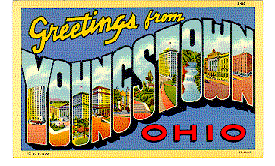
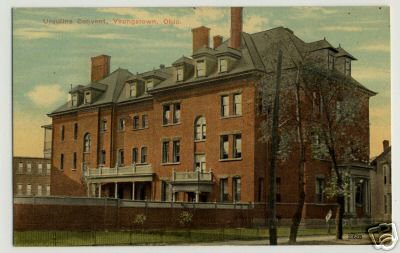
Youngstown Pride is pleased to announce the creation of a sister blog, Mighty Mahoning, your alternative source for all things Youngstown. Created by a fellow North Sider and Ursuline alum, and inspired (so he says) by yours truly, it should be ripe with great Youngstown stuff. Check it out at http://mightymahoning.blogspot.com
Saturday, March 04, 2006
Live from Powers... GLASS HARP!
Su per no va ( soo'per-no've)n. 1.A rare celestial phenomenon involving the explosion of most of the material in a star, resulting in an extremely bright, short lived object that emits vast amounts of energy. 2.The brief but intense career of Glass Harp.
In the late '60s and early '70s a power rock trio from Youngstown, Ohio called Glass Harp reached for the stars. They must have made contact, as references to stellar events seem to pervade much of their music. As a reviewer of their debut album observed,"...no fewer than five songs mention the sky, and three of the remaining ones talk about things like stars, rainbows, and the moon."
They were a bare bones group in the tradition of Cream, Jimi Hendrix Experience, and fellow Ohio band, The James Gang. But Glass Harp developed a signature sound of their own-a progressive one that allowed the members, collectively and individually, to stretch beyond the confines of standard form; breaks in songs for guitar, bass, flute, and drum solos were de riguere , as extended improvisations that would take the bands performances into the late hours.

The trio's following was particularly amazed by the lighting style and precise technique of the bands 18 year old guitarist Phil Keaggy, who aside from his youth, had the use of only nine fingers. Neither strike impeded his ability to produce highly lyrical solos. Combined with the tasteful, rhythmic bass lines of Daniel Pecchio and the sharp, assertive drumming of John Sferra, Glass Harp created a wall of sound that would thrill sell-out capacities across the upper Midwest and beyond.
While the band dissolved on the cusp of achieving mainstream rock stardom, they garnered a large and loyal regional following. National notoriety followed as they toured with the likes of, Traffic,Yes, The Kinks, Humble Pie, Alice Cooper, Ted Nugent, and Grand Funk Railroad. " They were just the warm-up group," recalls a journalist of the day, "But it was the first time I had heard a local group and felt that I had heard the headline concert."
With the release of their first album came more national attention, and even more enthusiasm back home-none of which was lost on the record company advertising execs, who exploited their burgeoning popularity with such ad copy as;
"The Glass Harp epidemic began about two weeks ago in Ohio and has been spreading so rapidly it has already affected some 36,000 in Cleveland alone. There is conclusive evidence to suggest that a new rock group Glass Harp is responsible for this epidemic. The release of their LP coincides almost exactly with the outbreak of this phenomenon.Contact your MCA Distributor today and become a carrier of the Glass Harp epidemic."
In all, the band's recorded output consisted of three critically- acclaimed LPs- all released on the Decca(MCA) label-Glass Harp, Synergy, and It Makes Me Glad. In spite of their short lived life, the band managed to imprint an indelible mark on the history of rock 'n' roll. Performing with some of the biggest bands of the day on stages ranging from the Filmore to Carnegie Hall.
-John August Schroeter, from the band's website at http://www.glassharp.net/
In the late '60s and early '70s a power rock trio from Youngstown, Ohio called Glass Harp reached for the stars. They must have made contact, as references to stellar events seem to pervade much of their music. As a reviewer of their debut album observed,"...no fewer than five songs mention the sky, and three of the remaining ones talk about things like stars, rainbows, and the moon."
They were a bare bones group in the tradition of Cream, Jimi Hendrix Experience, and fellow Ohio band, The James Gang. But Glass Harp developed a signature sound of their own-a progressive one that allowed the members, collectively and individually, to stretch beyond the confines of standard form; breaks in songs for guitar, bass, flute, and drum solos were de riguere , as extended improvisations that would take the bands performances into the late hours.

The trio's following was particularly amazed by the lighting style and precise technique of the bands 18 year old guitarist Phil Keaggy, who aside from his youth, had the use of only nine fingers. Neither strike impeded his ability to produce highly lyrical solos. Combined with the tasteful, rhythmic bass lines of Daniel Pecchio and the sharp, assertive drumming of John Sferra, Glass Harp created a wall of sound that would thrill sell-out capacities across the upper Midwest and beyond.
While the band dissolved on the cusp of achieving mainstream rock stardom, they garnered a large and loyal regional following. National notoriety followed as they toured with the likes of, Traffic,Yes, The Kinks, Humble Pie, Alice Cooper, Ted Nugent, and Grand Funk Railroad. " They were just the warm-up group," recalls a journalist of the day, "But it was the first time I had heard a local group and felt that I had heard the headline concert."
With the release of their first album came more national attention, and even more enthusiasm back home-none of which was lost on the record company advertising execs, who exploited their burgeoning popularity with such ad copy as;
"The Glass Harp epidemic began about two weeks ago in Ohio and has been spreading so rapidly it has already affected some 36,000 in Cleveland alone. There is conclusive evidence to suggest that a new rock group Glass Harp is responsible for this epidemic. The release of their LP coincides almost exactly with the outbreak of this phenomenon.Contact your MCA Distributor today and become a carrier of the Glass Harp epidemic."
In all, the band's recorded output consisted of three critically- acclaimed LPs- all released on the Decca(MCA) label-Glass Harp, Synergy, and It Makes Me Glad. In spite of their short lived life, the band managed to imprint an indelible mark on the history of rock 'n' roll. Performing with some of the biggest bands of the day on stages ranging from the Filmore to Carnegie Hall.
-John August Schroeter, from the band's website at http://www.glassharp.net/
Wednesday, February 08, 2006
Star Oyster House
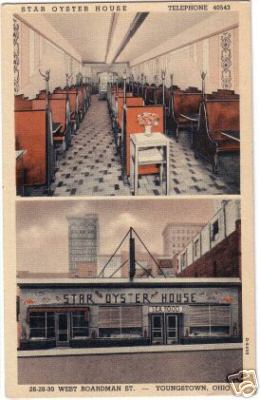
Star Oyster House had the best seafood in Youngstown according to this postcard. Located at 26-28-30 W. Boardman Street in downtown, it was also the oldest seafood place in town. Does anyone know when it closed?
Take me out to the ballgame...

This team represented The Ohio Works while playing in the Ohio-Penn League in 1906. Baseball is still strong in the Youngstown area, with the Minor League Mahoning Valley Scrapper playing not to far away in Niles.
Thursday, January 12, 2006
Former slaves in Youngstown
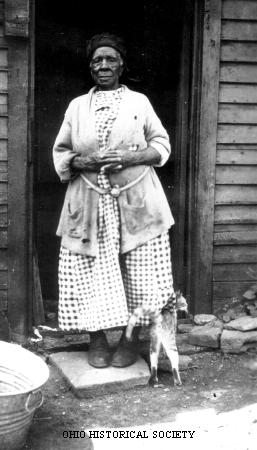
After the Civil War ended, many former slaves moved north in an attempt to find a place less critical of the color of their skin. Many chose to make Youngstown their home. It developing industry made it a place where jobs were often available to blacks at a time when they couldn't find jobs elsewhere. This woman here is an example of a former slave who made her home in Youngstown.

Wednesday, November 02, 2005
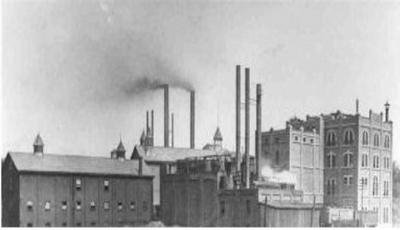
The Campbell Works, Youngstown Sheet and Tube
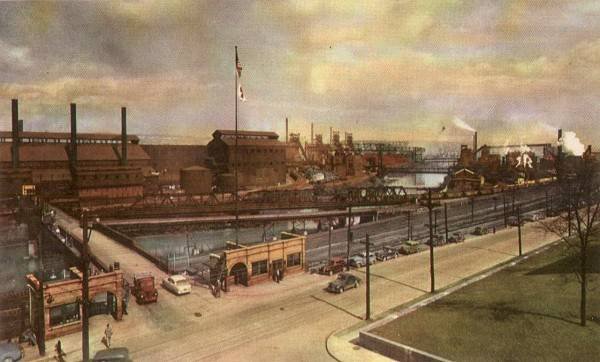
In November 1900, a group of 55 Youngstown citizens, led by James A. Campbell, raised $600,000 in capital to create the Youngstown Iron Sheet and Tube Company. Land was purchased along the Mahoning River approximately three miles east of downtown. In 1902, the mill opened for production.
Spectacular growth marked the company's second decade, some of it spurred by the demand for steel caused by World War I. In 1923, YS&T purchased the Brier Hill Steel Company of Youngstown and the Steel and Tube Company of America of East Chicago. During the 1930s the company survived the Great Depression and the 1937 "Little Steel" strike to emerge as a leading steel producer. In the 1960s, YS&T began to experience a decline. The company merged with the Lykes Corporation in 1969 and LTV Corporation in 1979, at which time all Youngstown operations were phased out.
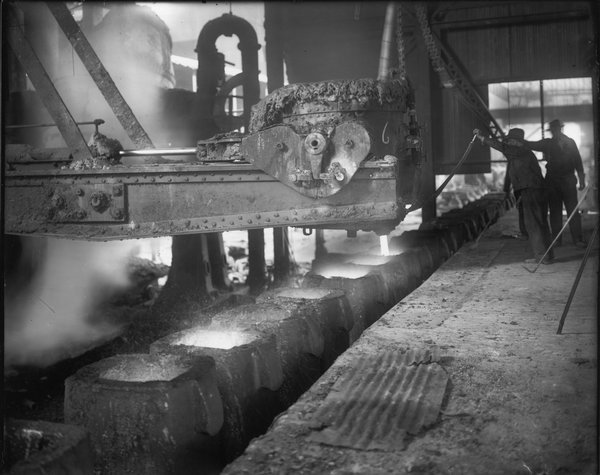
Youngstown Sheet and Tube workers pouring steel into molds (circa 1915).


Brier Hill

No neighborhood in Youngstown has more history behind it than Brier Hill. This Brier Hill image comes from the turn of the 20th Century, and features none other than the Brier Hill Meat Market, which I'm sure was a required stop for immigrants leaving the mills before making the evening's dinner.
St. John's Episcopal Church
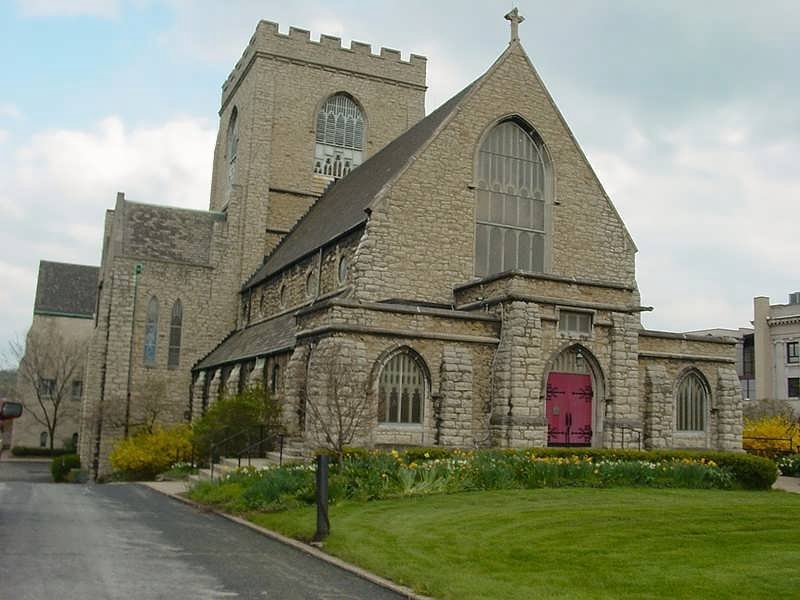
St. John's Episcopal Church was constructed in 1862. A great oral history of the church was compiled by YSU, as part of its ongoing oral history project. A link can be found here: http://www.maag.ysu.edu/oralhistory/cd1/OH1353.pdf
First National Bank on West Federal Street
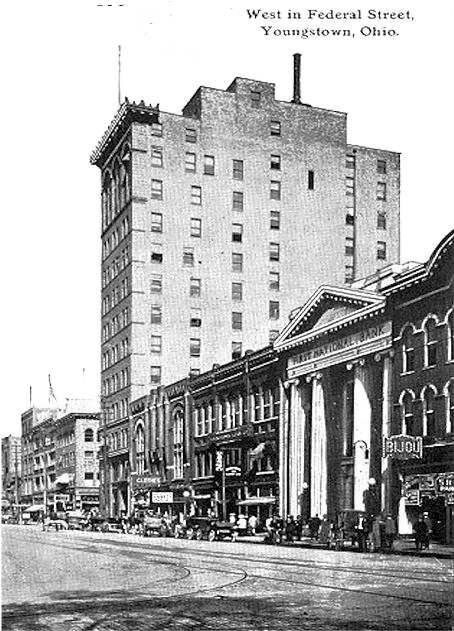
This historic image of West Federal Street includes the First National Bank. It was probably taken around 1900.
Historic Banks of Youngstown
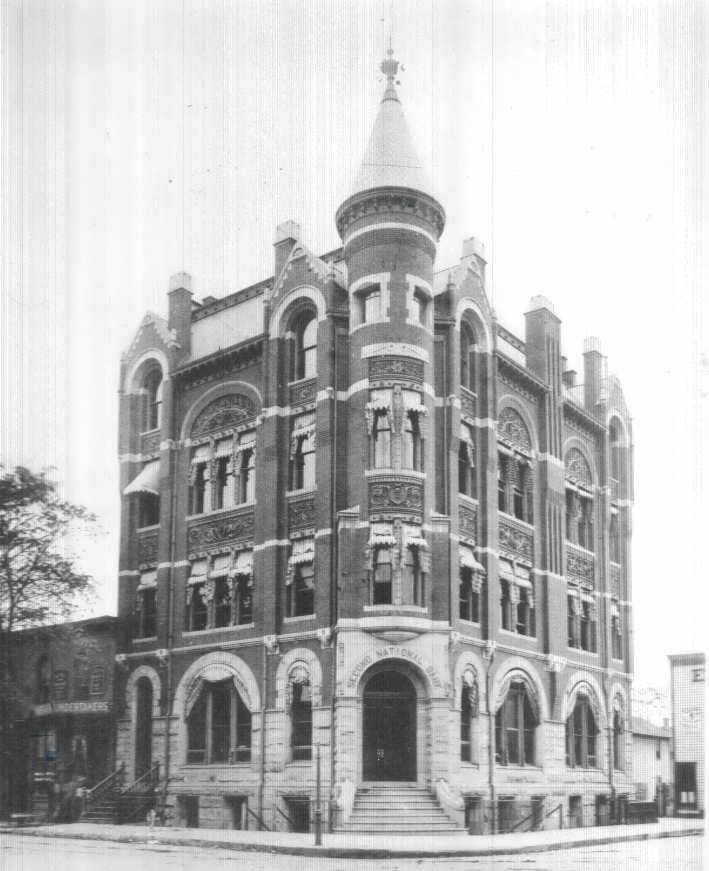

These two photos represent two very historic banks in Youngstown. The first is the Second National Bank and the second is the Dollar Bank. Both buildings were downtown on Federal Plaza.
Tuesday, November 01, 2005

Saturday, October 22, 2005
Youngstown Convocation Center Grand Opening Today!
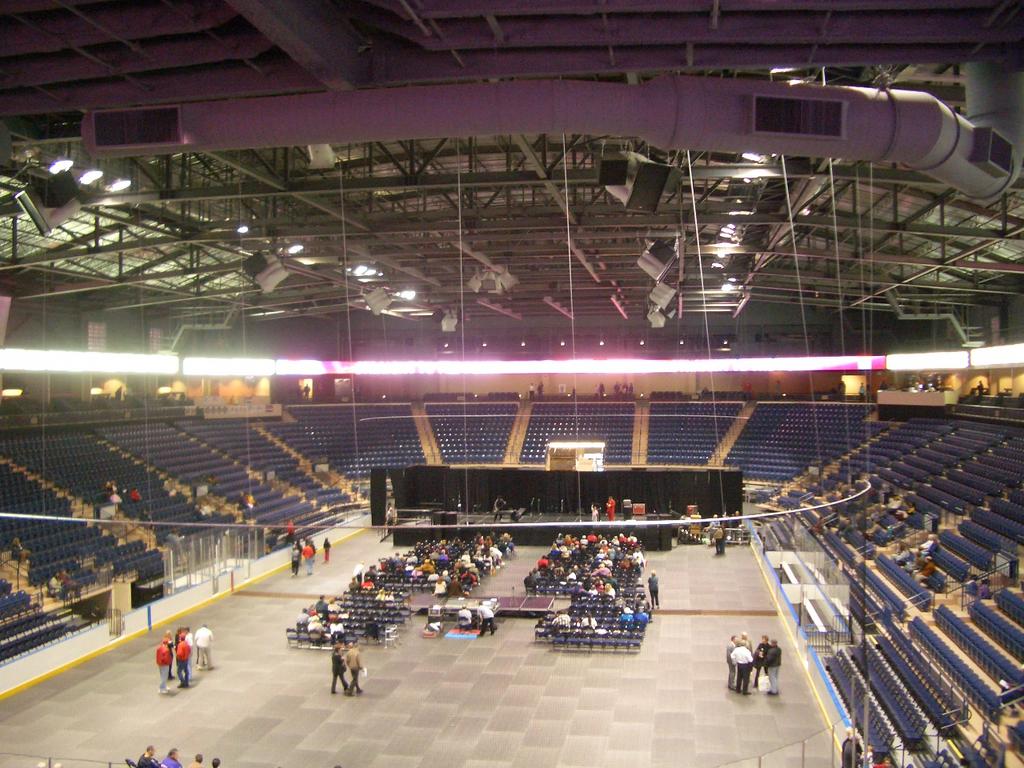
Today I had the opportunity to tour the newly opened convocation center in downtown Youngstown! It is a fabulous building, and I think will create a lot of new entertainment options for the people of the area. Some large name music groups (Three Doors Down and Tomy Bennett, for example) are already signed up to play there within the nexy month or so. The Youngstown Steelhounds, a minor league hockey team, will also make the convocation center their home. They won their season opener today 3-2!
Thursday, September 29, 2005
It's time to go out and enjoy the nightlife in Youngstown
The Jambar - ae
Issue: 9/29/05
--------------------------------------------------------------------------------
It's time to go out and enjoy the nightlife in Youngstown
By Eric Grosso
Just a few years ago, not very many people in Youngstown mentioned 'fun' and 'downtown' in the same sentence. Over the last few months, the words have become a common phrase to describe a weekend here.
With the opening of new clubs, restaurants, stores and lounges, downtown Youngstown is in an area of growth: something that seemed impossible a short time ago.
The new spotlight of downtown is the $41-million-Youngstown Convocation Center. The center already has top acts booked, including 3 Doors Down, Tony Bennett, Barenaked Ladies and the Trans Siberian Orchestra. The 5,700-seat venue will also house Youngstown Steelhounds hockey starting in November and a possible Arena Football League team in the future.
Countless forms of entertainment are just a short distance away. Classic bars and restaurants combined with big city style dance clubs make for an interesting mix for Youngstown residents.
Cedar's Lounge one of the most notable venues, housing a restaurant serving Lebanese and American cuisine. Cedars also hosts local and national performers. Pittsburgh heavy rockers The Motorpsychos bring their rhythmic punk with The Blastoffs this Friday. Acclaimed artist BJ O'Malley will perform her unique style of alternative county rock on Saturday.
It's also home base for local musicians The Zou, who held the latest Nouveau Rock Festival at Cedars a few weeks ago, will hold their 4th annual Rocky Horror Halloween Party on Oct. 29.
Cedar's also houses DJ Martini on Sundays, spinning new and underground cult classics. Every Tuesday is jazz and blues night with Teddy Pantelas and swing dancing is held every Thursday.
Two of Youngstown's newest clubs, The Bad Apple and Skeeter's Jazz Bar and Grill, add to the variety of Federal Plaza. The Bad Apple offers the best selection of martinis and also offers live entertainment, while Skeeter's has numerous jazz events throughout the week.
The Core and the Cell are two of the area's best dance clubs, bringing big-city décor and styles to Youngstown. Sports fans can visit Buffalo Wild Wings, which shows numerous sporting events in screens throughout the facility in addition to serving some of the area's best wings.
The re-opening of Federal Street in December started the movement, allowing for traffic to pass conveniently through downtown and generating interest for the first time since 1973. The street's re-opening also saw a number of other additions, including the Bean Counter Café in 2003 and B and B's Unique Ladies Boutique in 2004.
Federal Street isn't the only place to be entertained. The Nyabinghi on Salt Springs Road is usually the center of underground music and entertainment. The venue has hosted groups from Columbus natives Red Wanting Blue to synth-pop brother duo Gil Mantera's Party Dream and numerous local acts.
Thursday at the Nyabinghi will see the Rebreather farewell show, while Friday the 'Binghi will host rock acts Posture Coach, Dramatic Ending and Sam Goodwill. You Are The War That I Want and Soiler will perform on Saturday.
Along with music, perhaps the most entertaining event in the valley in "Crapaoke" held every Wednesday at the Nyabinghi. This off-tune karaoke features a wider-variety song list and encourages performers to let it all hang out on stage: in short, it's not your normal karaoke, and that's a good thing. It also offers some of the best drink selection and prices in town and there's no cover charge for the fun on Wednesdays.
The former Jay Jay's, now known as Shenanigans, hosts a foam party every Monday just a few minutes away from YSU on Market Street.
For the sports fan, YSU Penguin Football starts its Gateway Conference schedule on Saturday at 6 p.m. against Illinois State. In addition to the food and drinks offered in the tailgate lot, Inner Circle Pizza and B&O Station are usually packed on game day. The Penguins are currently 3-1.
Youngstown, at least in the entertainment aspect, is going through a renaissance. Go out and enjoy it.
Issue: 9/29/05
--------------------------------------------------------------------------------
It's time to go out and enjoy the nightlife in Youngstown
By Eric Grosso
Just a few years ago, not very many people in Youngstown mentioned 'fun' and 'downtown' in the same sentence. Over the last few months, the words have become a common phrase to describe a weekend here.
With the opening of new clubs, restaurants, stores and lounges, downtown Youngstown is in an area of growth: something that seemed impossible a short time ago.
The new spotlight of downtown is the $41-million-Youngstown Convocation Center. The center already has top acts booked, including 3 Doors Down, Tony Bennett, Barenaked Ladies and the Trans Siberian Orchestra. The 5,700-seat venue will also house Youngstown Steelhounds hockey starting in November and a possible Arena Football League team in the future.
Countless forms of entertainment are just a short distance away. Classic bars and restaurants combined with big city style dance clubs make for an interesting mix for Youngstown residents.
Cedar's Lounge one of the most notable venues, housing a restaurant serving Lebanese and American cuisine. Cedars also hosts local and national performers. Pittsburgh heavy rockers The Motorpsychos bring their rhythmic punk with The Blastoffs this Friday. Acclaimed artist BJ O'Malley will perform her unique style of alternative county rock on Saturday.
It's also home base for local musicians The Zou, who held the latest Nouveau Rock Festival at Cedars a few weeks ago, will hold their 4th annual Rocky Horror Halloween Party on Oct. 29.
Cedar's also houses DJ Martini on Sundays, spinning new and underground cult classics. Every Tuesday is jazz and blues night with Teddy Pantelas and swing dancing is held every Thursday.
Two of Youngstown's newest clubs, The Bad Apple and Skeeter's Jazz Bar and Grill, add to the variety of Federal Plaza. The Bad Apple offers the best selection of martinis and also offers live entertainment, while Skeeter's has numerous jazz events throughout the week.
The Core and the Cell are two of the area's best dance clubs, bringing big-city décor and styles to Youngstown. Sports fans can visit Buffalo Wild Wings, which shows numerous sporting events in screens throughout the facility in addition to serving some of the area's best wings.
The re-opening of Federal Street in December started the movement, allowing for traffic to pass conveniently through downtown and generating interest for the first time since 1973. The street's re-opening also saw a number of other additions, including the Bean Counter Café in 2003 and B and B's Unique Ladies Boutique in 2004.
Federal Street isn't the only place to be entertained. The Nyabinghi on Salt Springs Road is usually the center of underground music and entertainment. The venue has hosted groups from Columbus natives Red Wanting Blue to synth-pop brother duo Gil Mantera's Party Dream and numerous local acts.
Thursday at the Nyabinghi will see the Rebreather farewell show, while Friday the 'Binghi will host rock acts Posture Coach, Dramatic Ending and Sam Goodwill. You Are The War That I Want and Soiler will perform on Saturday.
Along with music, perhaps the most entertaining event in the valley in "Crapaoke" held every Wednesday at the Nyabinghi. This off-tune karaoke features a wider-variety song list and encourages performers to let it all hang out on stage: in short, it's not your normal karaoke, and that's a good thing. It also offers some of the best drink selection and prices in town and there's no cover charge for the fun on Wednesdays.
The former Jay Jay's, now known as Shenanigans, hosts a foam party every Monday just a few minutes away from YSU on Market Street.
For the sports fan, YSU Penguin Football starts its Gateway Conference schedule on Saturday at 6 p.m. against Illinois State. In addition to the food and drinks offered in the tailgate lot, Inner Circle Pizza and B&O Station are usually packed on game day. The Penguins are currently 3-1.
Youngstown, at least in the entertainment aspect, is going through a renaissance. Go out and enjoy it.
Thursday, June 16, 2005
N.E. Ohio is "haven" for wedding cookie tables!
The Mahoning Valley Historical Society has just opened a new exhibit entitled 'Mahoning Valley Weddings: Romance, Ritual and the Cookie Table.' My favorite aspect of the exhibit was this tidbit: The Mahoning Valley is a "haven" for the cookie table. Unknown to many areas throughout the country, this wedding tradition appears to be most popular in Northeast Ohio and Western Pennsylvania.
Check out http://www.mahoninghistory.org/Exhibits/mvwpics.stm for more information.
Check out http://www.mahoninghistory.org/Exhibits/mvwpics.stm for more information.
YSU made right decision for the Wick Pollock Inn
(editorial)
By The Jambar Editorial Board
Published: Thursday, June 16, 2005
Article Tools: Page 1 of 1
It may take a while longer for the Wick Pollock Inn to reopen, but Youngstown State University officials made the right decision to pull out of contract talks with Paran Management, the inn's potential developer.
From the start, the new plan to reopen the inn, which is located on the corner of Spring Street and Wick Avenue, didn't seem much better than the old plan that resulted in failure.
YSU first attempted to break into the hotel business in 1986. That year, the university leased the property for a period of 25 years to a partnership called the Pollock Inn Restoration Association. The partnership then took out a loan with First National Bank and converted the 14-room mansion into a 76-room inn.
Business wasn't exactly booming. In 1998, FNB foreclosed on the partnership, the inn shut its doors and the property has gone unused ever since. In September 2004, after a lengthy legal battle, FNB turned the remainder of the 25-year lease over to YSU in exchange for $500,000.
YSU, eager to reopen and renovate the fast deteriorating inn, solicited 22 companies for bids, but only Paran responded. The proposal Paran initially submitted to YSU bordered on insulting.
Paran asked for a 50-year lease, with YSU paying $250,000 up front to the company. After the inn was operational, Paran would pay the $250,000 back to YSU as well as a symbolic $1 per year rent for the property. Essentially, Paran was asking the university to give the property away for nothing.
University officials apparently were not able to negotiate a better deal, so they walked away - a smart decision.
Still, with every passing day, the inn falls deeper into disrepair. The building is a historic treasure and should not be subjected to such neglect. If university officials can't find a developer to overhaul the crumbling edifice, they should take the initiative and begin to renovate the building themselves.
In fact, YSU may ultimately be the best entity to run the Wick Pollock Inn. A former partner in the failed 1986 venture, Robert J. O'Malley, told the Jambar in October 2004 that for it to be a viable project, YSU needs to operate the inn itself.
"You don't need a major firm to come in and run it," O'Malley said. "You need to run it yourselves."
If the inn is capable of becoming profitable, why not reap the financial benefits? If the inn isn't capable of making money, no developer is going to want to come in and operate the place anyway.
It is questionable whether Youngstown's economy can even support a full service hotel again. However, if YSU uses the building as a learning tool for students in the hospitality management program, as has been mentioned in the past, with students staffing the inn, the venture could prove both financially and educationally profitable.
But time is money and the university needs to act fast before the historic Wick Pollock Inn deteriorates further.
By The Jambar Editorial Board
Published: Thursday, June 16, 2005
Article Tools: Page 1 of 1
It may take a while longer for the Wick Pollock Inn to reopen, but Youngstown State University officials made the right decision to pull out of contract talks with Paran Management, the inn's potential developer.
From the start, the new plan to reopen the inn, which is located on the corner of Spring Street and Wick Avenue, didn't seem much better than the old plan that resulted in failure.
YSU first attempted to break into the hotel business in 1986. That year, the university leased the property for a period of 25 years to a partnership called the Pollock Inn Restoration Association. The partnership then took out a loan with First National Bank and converted the 14-room mansion into a 76-room inn.
Business wasn't exactly booming. In 1998, FNB foreclosed on the partnership, the inn shut its doors and the property has gone unused ever since. In September 2004, after a lengthy legal battle, FNB turned the remainder of the 25-year lease over to YSU in exchange for $500,000.
YSU, eager to reopen and renovate the fast deteriorating inn, solicited 22 companies for bids, but only Paran responded. The proposal Paran initially submitted to YSU bordered on insulting.
Paran asked for a 50-year lease, with YSU paying $250,000 up front to the company. After the inn was operational, Paran would pay the $250,000 back to YSU as well as a symbolic $1 per year rent for the property. Essentially, Paran was asking the university to give the property away for nothing.
University officials apparently were not able to negotiate a better deal, so they walked away - a smart decision.
Still, with every passing day, the inn falls deeper into disrepair. The building is a historic treasure and should not be subjected to such neglect. If university officials can't find a developer to overhaul the crumbling edifice, they should take the initiative and begin to renovate the building themselves.
In fact, YSU may ultimately be the best entity to run the Wick Pollock Inn. A former partner in the failed 1986 venture, Robert J. O'Malley, told the Jambar in October 2004 that for it to be a viable project, YSU needs to operate the inn itself.
"You don't need a major firm to come in and run it," O'Malley said. "You need to run it yourselves."
If the inn is capable of becoming profitable, why not reap the financial benefits? If the inn isn't capable of making money, no developer is going to want to come in and operate the place anyway.
It is questionable whether Youngstown's economy can even support a full service hotel again. However, if YSU uses the building as a learning tool for students in the hospitality management program, as has been mentioned in the past, with students staffing the inn, the venture could prove both financially and educationally profitable.
But time is money and the university needs to act fast before the historic Wick Pollock Inn deteriorates further.
Subscribe to:
Posts (Atom)