Monday, April 24, 2006

Snap the Whip!


I have to admit that something here in D.C. recently made me proud of Youngstown. I made a trip to the National Gallery of Art on the Mall to take in the Winslow Homer show they were showing (it closed at the end of February). Homer is one of the eminent American artists and his works capture American life, from the hardships of the Civil War to longshoremen rescuing drowning sailors in the Northeast, in ways that other artists can only attempt. His most famous work perhaps, is Snap the Whip, detailing the game that young kids play in an attempt to send their friends flying across a field. Certainly no show on Homer would be complete without this painting and yet, it wasn't present. I knew why. The Butler wasn't about to give it up! This piece has the good fortune of being a gem in Youngstown, as part of the permanent collection of the Butler Institute of American Art. The Butler's collection is currently at 20,000 pieces of American art, including paintings, statues, and photography. If you haven't been there recently, I recommend checking it out. They are currently exhibiting several shows in The Beecher Center, housed in the south wing of the Butler's Youngstown location. It is the first museum addition dedicated solely to new media and electronic art.

$2M debt passes to Forum in default Oakhill Renaissance closing announced


Friday, April 21, 2006
By DEBORA SHAULIS and WILLIAM K. ALCORN
VINDICATOR STAFF WRITERS

YOUNGSTOWN — Forum Health officials say the nonprofit owners of Oakhill Renaissance Place have defaulted on a $2 million development loan that the health system is now responsible for.

Forum disclosed that information Thursday, after Southside Community Development Corporation told Oakhill's 25 tenants to prepare for the building's closing "as early as April 30, if necessary."

Forum Health is projecting $60 million in losses for 2006 without what it calls a radical restructuring and $25 million in concessions from its unionized employees.

"This failure on the part of the Southside Community Development Corporation has forced Forum Health to deplete its resources by $1.9 million at a time of tremendous financial challenge for the system," officials said in a prepared statement.

Oakhill Renaissance Place, 345 Oak Hill Ave., is the former Forum Health Southside Medical Center. The volunteer SCDC was formed in 1998 to convert the building into a community hub as part of South Side revitalization.

Tenants of Oakhill

Oakhill's tenants include Youngstown City Health Department, the Mahoning County coroner's office and morgue, Mahoning Valley Hospital for long-term acute care patients, and various educational and social service agencies.

Janet Yaniglos, vice chair of SCDC's board of trustees, said tenants employ more than 200 people and occupy 45 percent of the building.

The board is saddened that its recent efforts to keep Oakhill open have been unsuccessful, Yaniglos said Thursday during a brief press conference.

The relationship between Forum Health and SCDC has been unclear in recent weeks.

A number of city and county officials have said Forum Health had been financially supporting Oakhill, with figures ranging from $80,000 to $100,000 per month.

Reports denied

SCDC director Adrian R. Byrne recently denied those reports, telling a reporter that Forum's financial stake in Oakhill was "discretionary." Byrne said: "They supported us when they felt like it ... They'd help us if something broke."

Atty. Stuart Laven Jr. of Cleveland, who represents SCDC, said Thursday that Forum Health had provided a "substantial amount" of money for Oakhill's operations. Laven was identified as SCDC's spokesman, but he didn't return other phone calls seeking additional comment.

"Forum Health entered the Southside arrangement as a goodwill effort to our community back in September 2001," the health system's statement read. "Having sold the building to our community for $1, we agreed to help subsidize its operations for a period of nine months only and guaranteed a $2 million loan to develop the property. Forum Health has had numerous conversations with their management since the beginning of this year informing them that we would no longer be providing this subsidy."

Created a crisis

SCDC said the loss of what it called third-party financial support created a crisis that led to a decision to close the facility.

Some tenants were surprised to receive eviction notices Wednesday.

"Our little bubble is just kind of deflated," said Jacqueline Burley, director of Protestant Family Services, a faith-based program that supports people in emergency situations by providing food and helping with utility bills.

Protestant Family Services was in the middle of a five-year lease at Oakhill. "I was looking forward to renewing it," Burley said, adding that she would have preferred a 10-year contract. At Oakhill, Protestant Family Services enjoyed access to the building's conference center, storage space, handicap-accessible features and central location with bus service.

"I sure wish someone would come through and pick up the pieces so we can stay here," Burley said. Otherwise, the program will continue in a new location, she added.

Bert Cene, director of Mahoning Columbiana Training Association, said that agency's youth center in Oakhill Renaissance Place will probably move to MCTA's offices at Front and Market streets. Cene said he'd prefer not to house adult and youth employment programs in the same building. The youth center has been in the Oakhill complex since 2004.

Too little notice

The city health department "can't realistically move in two weeks," said Jason Whitehead, chief of staff for Youngstown Mayor Jay Williams.

City health commissioner Neil Altman said he knows of no available space that is set up for medical purposes as is the Oakhill building. It is extremely expensive to retrofit a building for medical use, he said.

"We looked for space for 10 years before this became available. All we had to do to move in was install a piece of security glass for the records department," Altman said.

The health commissioner said he plans to meet with Williams, he hoped today, to see if he has any ideas.

Mahoning Valley Hospital is Oakhill's largest tenant. SCDC said talks are ongoing about keeping the building open on a short-term basis for the hospital's sake. Oakhill's contract for maintenance services ends April 30, however.

Michael Senchak, president of Mahoning Valley Hospital, was unavailable to comment Thursday. Senchak told a reporter Monday that his board is looking at property in Boardman to build a hospital and relocate.

SCDC has been consistent in saying it needed an anchor tenant at Oakhill. Earlier this month, Byrne said tenant leases generated about $1.4 million in annual revenues, but that income didn't offset all expenses.

SCDC saw a potential anchor in Mahoning County. Two years ago, it offered to donate Oakhill to the county and chip in $500,000 for renovations to consolidate county offices, including the Department of Job and Family Services. Two different boards of county commissioners have studied the offer but did not take action.

The county rents space for JFS in McGuffey Plaza for $37,000 per month.

Mahoning County Commissioner Anthony Traficanti said the commissioners were still determining whether the county could afford to maintain the Oakhill property. Roof repairs were estimated at $600,000, he said.

shaulis@vindy.com

Saturday, April 22, 2006

Wiki-fying Youngstown

About six months ago I had the pleasure to stumble across a little known website called Wikipedia. By little known, I mean I was one of the last people in my age bracket to learn about it. Upon browsing the articles on the site, I learned that there was so much the world can know about Youngstown that wasn't published elsewhere in a concise fashion. Therefore, I began to create and edit article relating to Youngstown. In such time I have created articles on The Vindicator, the Youngstown Fire Department, Youngstown Sheet and Tube, Ursuline High School and the best sports team ever to play in Youngstown, the Pride. I have edited the main Youngstown article and countless others. All are works in progress, requiring the skills and knowledge of others to finish. So, if you are ever bored at work and want to spend some time on your editing skills, put them to work on Wikipedia... and maybe just share some of your Youngstown knowledge!

Friday, April 21, 2006

Picture of the Day

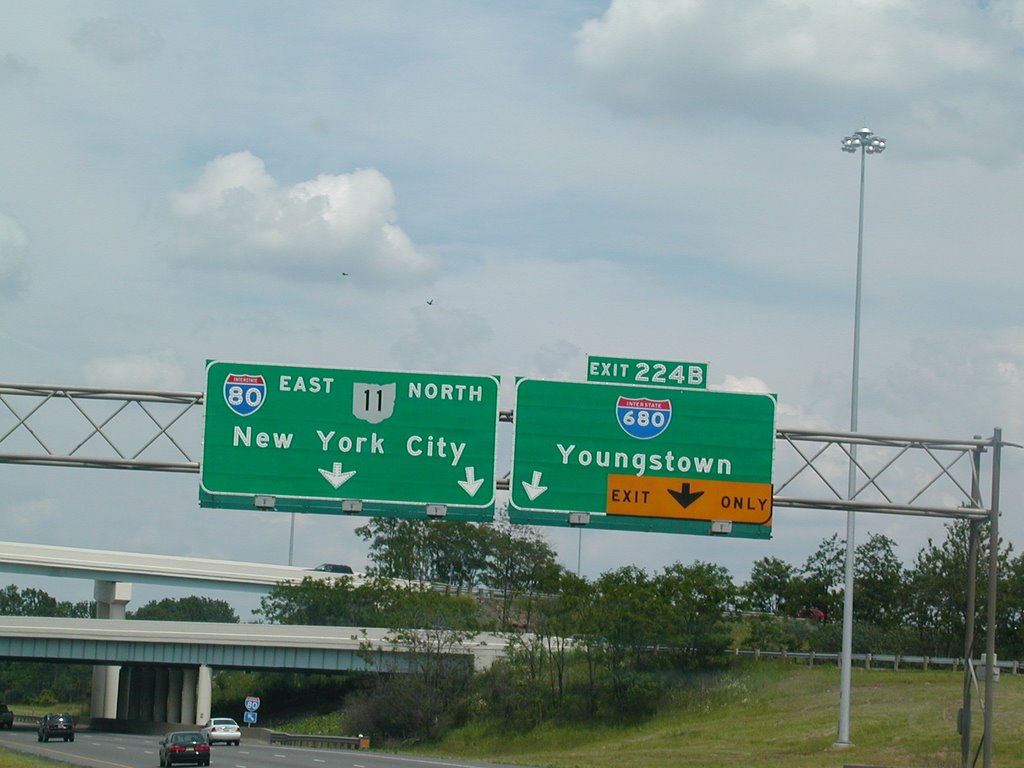
A sign leading the way home...

Tuesday, April 18, 2006

Banquet at the B&O?


It seems the magical B&O Station is back in business. Not so much as a full scale restaurant this time, but rather a banquet hall. Hosting everything from weddings to yoga classes, it really seems like they are branching out. Good for them. I hope this idea sticks. With the right marketing and an early influx of business, it might just work. Word of mouth is the key here. So many people have never been down to see the facilities that they need to really brand the site as a historic location within the city. It will be interesting to see what happens with this one.

Check it out here: http://banquetatthebno.com/home.html

On this date...

In Youngstown History:
April 18, 1956: J.L. Mauthe, president of the Youngstown Sheet & Tube Co., reveals that the steel company is analyzing the expenditure of another $15 million to $20 million on expanding and improving its Mahoning Valley plants.

April 18, 1931: Youngstown firemen rescue Miss Margaret Calhoun from her upstairs room at 882 Mahoning Ave., where she was overcome by smoke after fire caused by a gasoline explosion damaged the house.

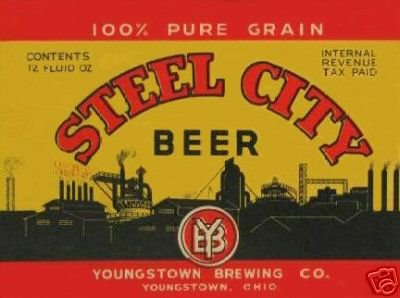
The Burgh ain't the steel city!


When I'm in need of a thirst quencher, I grab for an icy cold Steel City Beer! Proudly brewed by the Youngstown Brewing Company.

Friday, April 14, 2006

My angel is the centerfold

Not even closely related to Youngstown except that this is the University of Pittsburgh Marching Band playing the incredible J. Geils Band ''Centerfold'' at the Youngstown State Game from September 21, 2005. Our Penguins were marched on to the tune of 41-0.


(Get it? Marching Band. March of the Penguins. I crack myself up!)
A great interview with the late Bishop James Malone on the history of Ursuline High School, what it meant to him, and the city, can be found here, at the YSU Oral History Archives.
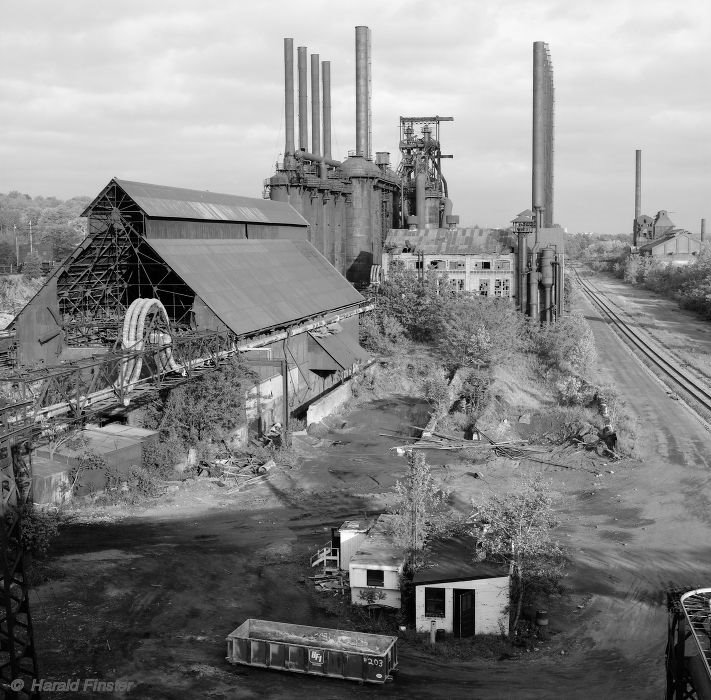
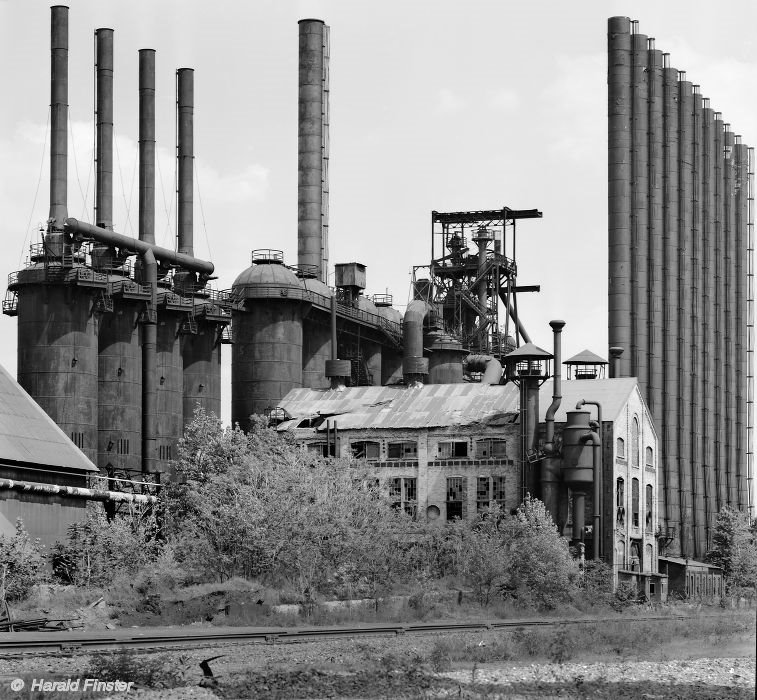
I discovered these incredible photos of the Youngstown Sheet and Tube Jeannette blast furnace online.


Photos by Harald Finster, 05/24/1992, StahlArt Industrial Prints

Steel Museum library in trouble?


Partnerships weighed to maintain library
Friday, April 14, 2006
The Steel Museum will remain open, a spokeswoman says.

By DEBORA SHAULIS
VINDICATOR STAFF WRITER

YOUNGSTOWN — Representatives of the Ohio Historical Society, Youngstown State University and Mahoning Valley Historical Society are discussing partnerships that could lead to the transfer of the archives library from Youngstown Center of Industry and Labor, also know as the Steel Museum.

"We're not close to a decision," said Kathy Hoke, manager of communications and media relations for the Ohio Historical Society. "The right amount of discussion needs to take place."

The final decision rests with the Ohio Historical Society's board of trustees, Hoke noted.

There is "absolutely no substance" to rumors that the Steel Museum will close, Hoke said. "We're committed to continuing to operate the museum for the public benefit."

The museum and archives library are separate divisions of the Ohio Historical Society. Both are housed at 151 W. Wood St., across from St. Columba Cathedral. Annual attendance is estimated at 4,000, Hoke said. One-fourth of visitors use the archives library on the second floor, where admission is free. Exhibits are on the lower floors, and admission fees are charged.

Gist of talks

As for consolidation, "We have had discussions over a period of months," said H. William Lawson, director of Mahoning Valley Historical Society. The gist of those conversations has been, "If they were to pull back on their staffing and close that facility or pare it back drastically, what can we do locally to cooperate to keep services going?"

Ideas range from keeping the Steel Museum's archives library open with help from a "consortium of organizations with similar missions" to distributing the collection to local institutions if the Ohio Historical Society closes the space, Lawson said.

It's the Ohio Historical Society's decision to make, but "They aren't going to do anything that doesn't have local support," Lawson said. "The ultimate goal is to keep the collections in [the Steel Museum] available to the public. We have a large part to play about that."

Lawson doubts that Mahoning Valley Historical Society would be able to absorb all of the Steel Museum's archives. If the library closes, decisions must be made about which pieces of the collection are best suited for particular institutions, he said.

Martha Bishop, research assistant at the Steel Museum's archives library, said the collection contains records from Mahoning, Trumbull, Columbiana, Harrison, Jefferson and Carroll counties. That's because it's the only branch of the Ohio Historical Society's archives outside the main division in Columbus.

What's in archives

The archives library's holdings are largely related to steel but also concern labor, industrial and local history, Bishop said. Items include oral histories on videotape by steelworkers and their families; various newspapers on microfilm; maps; and Trumbull County land record ledgers that date back to the early 1800s.

Money will be a factor in the Ohio Historical Society's decision. As a nonprofit organization, it still receives 70 percent of its funding from state government. The overall amount has declined in recent years, however, and employee layoffs have occurred.

The society is no worse off than other cultural institutions that want to do more than their budgets will allow, Hoke said.

The archivist who manages the Steel Museum's collection divides his time between Youngstown and Columbus, where the Ohio Historical Center is located. "We have some critical staffing needs in state archives," Hoke said.

shaulis@vindy.com

Monday, April 10, 2006

The Old Welsh Congregational Church


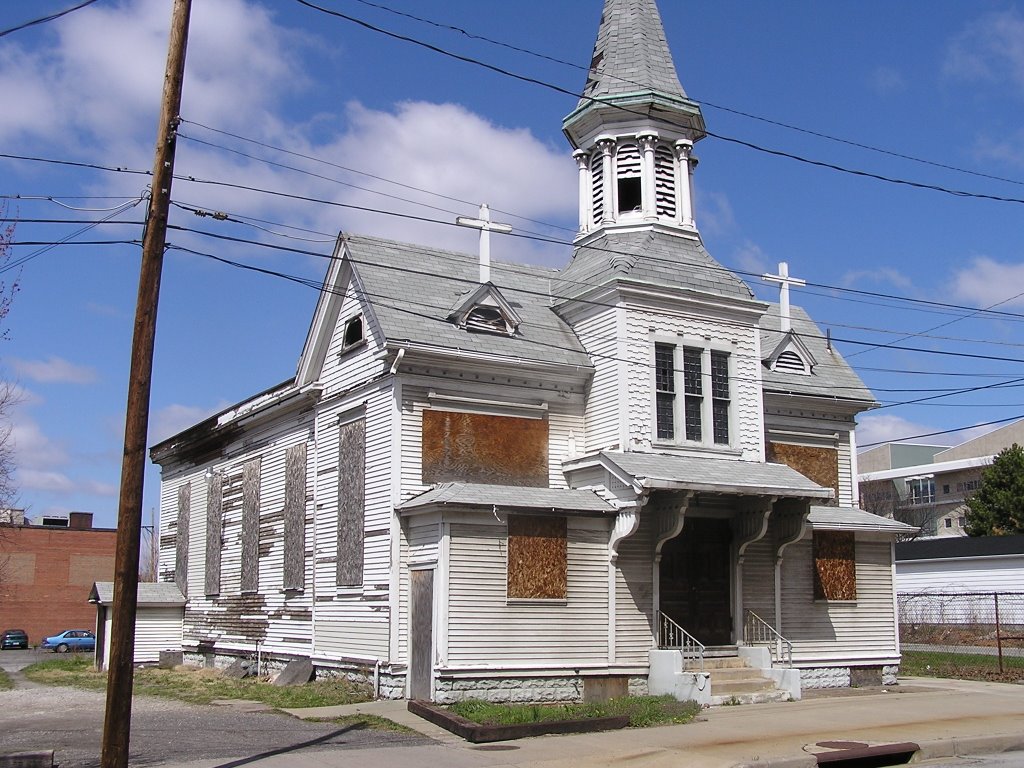
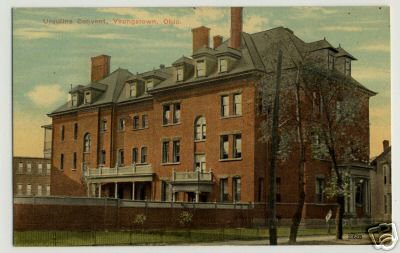
The Old Welsh Congregational Church, located on Elm Street across from St. Columba Cathedral, is the oldest religious building in the downtown area. Built in 1861, the congregation worshipped there for over 100 years. In 1976, the Reverend Andrew Redmond and his congregation of 50 bought the church and renamed it The Messiah Holiness Church of God in Christ. They remained there until a fire in 1997. They were offered space in the St. Columba Cathedral for the congregation to continue its worship. Reverend Redmond looks forward to the day they can return to the old church building.

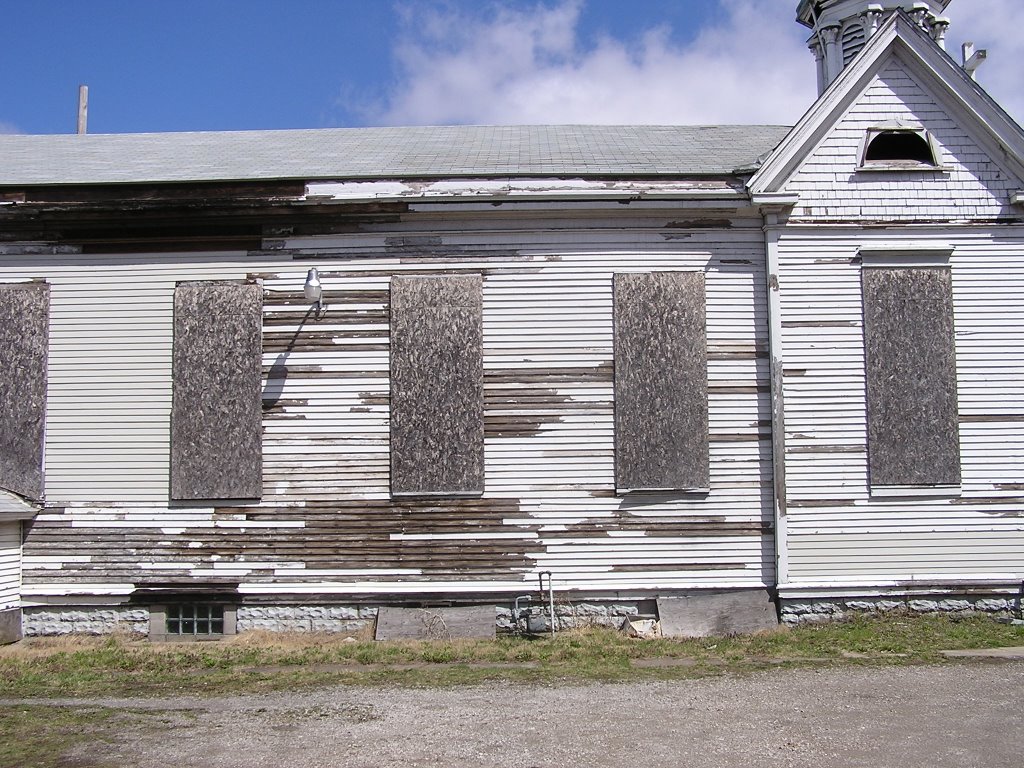
Some of the church has been restored, but much remains to be done. The siding still needs to be replaced on the outside and the windows need to be replaced.

As one of the oldest religious building in the area still at its original location, this is an important building and needs to be saved. A group of carpentars led by Dave Andello has contributed many hours to putting the church back in good repair. If you are interested in helping out, give Dave a call at 746-0551.

And then there was one...


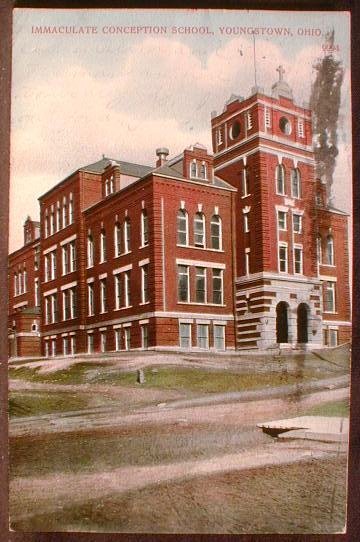
With yesterday's announcement that Immaculate Conception and St. Mathias schools were closing at the end of this year, it leaves just one Catholic school in the city - St. Christine's on the West Side. It is a sad state when a city of 70,000 can't support more than one Catholic School, but the numbers just aren't there. According to the Vindy, enrollment at Immaculate Conception is at 63. As recently as 1998, there were 164 pupils. In the 1960s, there were more than 700 students. Only ten of the current 63 pupils are Catholic, and only four are from Immaculate Conception parish. Clearly that is not sustainable.

I can remember when as a young lad in the early 1990's at St. Rose in Girard, that St. Edward's (North Side), St. Dominic's (South Side), St. Anthony's (North Side), St. Brendan's (West Side), and St. Patrick's (South Side) could all field a team or two for the Parish Basketball League. Now all are closed and the only parochials in the area are St. Christine in Youngstown, Holy Family in Poland, St. Nicholas in Struthers, St. Joseph in Campbell and St. Luke and St. Charles, both in Boardman.

North Side Pool


If you haven't travelled Belmont Avenue and Tod Lane recently, you may not know that North Side Pool as you may have known it is just a memory. The city recently contracted to have the old pool removed, and they are promising that the new pool will be up and operating this summer. I have to admit, they are moving along at a pretty good clip. The bath house, which has always had a flat roof, now has a new peaked roof--almost.

Friday, April 07, 2006

Youngstown Pride wants you!

I am currently looking for new members who would be interested in posting articles relating to the history and current redevelopment of Youngstown. If you think you have what it takes, let me know (post a comment to this post). I am always looking for great photos, new or historic, and articles from the media or self-written. I hope to get more regular with the posting and can't do it alone!

Also, if you like to write about local politics, I want writers for The Daily Traficant, my not-so-daily site about politics and Jim Traficant. It is a mish-mash of stuff, but if someone wants to streamline it, let me know!

Thursday, April 06, 2006

Shout Youngstown

Another Youngstown blog has struck my fancy. First was the blog Mighty Mahoning by my dear friend Manning, and now a blog called Shout Youngstown. Who would have thought that he/she could make Youngstown sound as cultured? Good stuff on how to redevelop the city. Shout Youngstown

Wednesday, March 22, 2006

People on the Move


Where else can you travel around a city for only a buck? Youngstown's WRTA transit system has been moving Youngstown resident's around the city for years. Check out their website for route and fare information at www.wrtaonline.com/.

Tuesday, March 07, 2006

Who was Frank Bohn?

In certain circles in the Youngstown-area, Frank Bohn is most famous for his 1915 statement, "Everybody breathing dirt, eating dirt - they call it "pay dirt," for Youngstown clean would be Youngstown out of work." Few interpret him as anything more than a steel worker who recognized the importance of the industry in the Mahonig Valley. His story, however, is that of an active American socialist. He was greatly concerned about the plight of the American worker, particularly in the booming steel industry of the early 1900's. He wrote many letters, propoganda pieces, and books describing what he considered the "future system of industrial society."(1) He was an organizer in the Socialist Labor Party (SLP) and the Socialist Trade and Labor Alliance. He was a frequent contributor to The Masses, one of the dominant socialist arts magazines of the early 1900's, which described itself as a "revolutionary not a reform magazine."(2)

As a young man from Michigan, he was part of the state's delegation to the SLP's 1904 convention in Chicago. He was described as "affable, slick, polished, a fluent talker, making quite an impression."(3) He wholeheartedly believed in what he wrote, stating, "under Socialism industrial government as well as political government will be democratic. Its purpose will be to manage production and to establish and conduct the great social institutions required by civilized humanity. Political government will then, of course, have ceased to exist."(4) His ideas were revolutionary in the United States, yet no doubt struck a cord with recent European immigrants escaping harsh working conditions and intolerance in their native land and looking for a sense of community in their new country.

Bohn would later become the National Secretary of the SLP in the United States, although his mismanagement of the organization would see him removed several years later. He continued to write his beliefs on socialism however but became discredited within the organization, with the SLP today claiming that because of his lack of leadership, "he came nearer than anything to wiping out the Socialist Labor Party."

1) The Intellectual
2) Kaaterskill Books
3) www.slp.org/pdf/slphist/slp1_hk.pdf
4) Industrial Socialism. Haywood and Bohn. Charles Kerr and Co. 1906.

Seeing Life Decades Ago Through Lens of Youngstown

The Business JournalJul 11, 2005 8:05 a.m.

By Dan O’Brien

Two years ago, The Youngstown Historical Center -- best known to residents as the Steel Museum -- came dangerously close to suffering the same fate as the Mahoning Valley’s steel industry.

Instead of closing its doors, however, the facility is experiencing a new lease on life. Earlier this year the museum unveiled a new exhibit and officials expect that state funding for the Ohio Historical Society in Columbus – which operates the Youngstown center – will remain stable for the foreseeable future.

Moreover, Columbus has earmarked more funding to promote the facility and adopted a policy that allows sites to raise money independently to help pay for their operations and educational programs.

“The Historical Society is trying to make the sites more entrepreneurial,” says Nancy Haraburda, site manager at the Youngstown Historical Center. Before, any private contributions went into the society’s general fund and then were meted out among the 60 different sites throughout the state. “Now, people can make donations to a specific site, such as this one,” she says.

Stronger local support is precisely what the museum needs, Haraburda states. One of the biggest peeves she and others share is the overwhelming number of people in the community who have never visited the center and, consequently, have so many misconceptions about what it offers.

The rise and fall of steel in the Mahoning Valley is the focus of the center, Haraburda says, but it’s more useful to interpret the industry as a backdrop against a much more compelling story.

That story is the odyssey of the industrial worker during the 20th century, a theme evident as soon as the visitor steps inside the museum’s permanent collection, “By the Sweat of Their Brow: Forging the Steel Valley.” As the visitor walks in, he is greeted by a life-size mannequin of a steel worker fitted with protective glasses, a hard hat and industrial coveralls.

“We wanted to make sure that people know he is the most important part of the exhibit,” Haraburda says.

The collection occupies two floors filled with thousands of articles and artifacts related to industrial production – some from outside the Mahoning Valley. Tools forged from early iron manufacturing processes of the 18th century and early 19th centuries are on display, while methods of steel making during the 20th century are exhibited through videos and models. A pulpit from which workers monitored steel production was donated by LTV Steel.

A third floor is dedicated to archives on labor and industry. They consist of a library, company records, transcribed oral histories and microfilmed copies of local newspapers and workers publications.

In between is a tale of a sleepy frontier community that grew as Americans moved west and, in the 19th century, immigrants from Ireland, Germany, England, Scotland and Wales settled here as the iron and steel industry took root. By the first two decades of the 20th century, as immigrants from southern and eastern Europe joined the ranks of industrial workers, the Mahoning and nearby Shenango Valley emerged as the fifth-largest steel producing region in the world.

Smoke and soot was so ubiquitous that socialist labor leader Frank Bohn was prompted to write in 1915: “Everybody breathing dirt, eating dirt – they call it ‘pay dirt.’ For Youngstown, clean would be Youngstown out of work.” The quote, so prophetic in hindsight, is among several sayings interspersed throughout the exhibit.

Through the lens of Youngstown, visitors get a glimpse of the American urban and industrial experience, and can grasp firsthand the relationship between big business and community, Haraburda relates.

Featured among the displays is a mock-up of a sparsely furnished company house, circa 1931. The structures were usually constructed by a development arm of the corporation, such as the Buckeye Land Co., a subsidiary of The Youngstown Sheet & Tube Co., and then rented or sold to mill workers. Large employers exerted even more control over their work forces by establishing company stores, which they owned and operated.

Huge photographs picture pivotal moments in the community’s history, such as the 1916 riots in East Youngstown, today Campbell. That year, workers demanding a pay increase to 25 cents an hour at Sheet & Tube attempted to strike. After an altercation with company guards, workers vented their frustrations on the city, torching most of the business district. A contingent of the Ohio National Guard was called in to quell the disorder; three people were killed and 27 more were wounded.

Another huge photo depicts men posing for the camera at a nearby hospital, their feet, hands and faces wrapped in gauze to treat serious burns they suffered working in the mill.

“If a worker fell into a vat of molten metal,” Haraburda continues, “there was nothing you could do for him.” Instead, she relates, the company estimated the weight of the average steel worker to be 110 pounds. When such an accident occurred, 110 pounds of steel would be lopped off, cooled and then buried in place of the lost worker. The practice continued until the Second World War, when every ounce of steel was needed for the war effort.

A small exhibit is also devoted to the Steel Workers Organizing Committee, who called the 1937 “Little Steel” strike against the Republic Steel Co. and Sheet & Tube in Youngstown and Warren. That committee formed the basis of what is today the United Steelworkers of America.

There are short biographies of leading industrialists of the era: Andrew Carnegie, Joseph G. Butler and James Campbell. Aºnother display featuring patterns sculpted from wood used to form molds for intricate machine parts highlight the exquisite craftsmanship many of the steel workers possessed.

Small video screens are also spread throughout the exhibit. One in particular reflects on “Black Monday” – Sept. 19, 1977 – the day Youngstown Sheet & Tube announced it would close its Campbell Works, immediately displacing more than 5,000 workers. The short video touches upon the efforts of the community to save the mills, highlighting the attempts of the Ecumenical Coalition to buy Sheet & Tube’s Brier Hill Works and operate it under community ownership.

The museum hosts events and lectures, and receives many tour groups from local schools, Haraburda notes. This month, Youngstown State University’s Center for Working Class Studies is sponsoring a photo essay, “The Bittersweet Living,” which features the photography of Guy Saldanha. The exhibit spotlights the everyday life of working Americans.

The Youngstown Historical Center earlier this year unveiled a new exhibit, “Kilroy Was Here,” which depicts life in America during the 1940s. The exhibit was first displayed at the Historical Society in Columbus, then scaled down and moved to Youngstown in January.

Haraburda says traffic through the museum usually picks up at the end of May when more school groups are scheduled to visit. “We were very busy in January and February,” she reports. “We’ll have about 500 kids coming through this month [May].”
Harry Meshel, former state senator and majority leader during the 1980s, successfully lobbied for funds to construct the museum. He’s encouraged with the direction the facility is headed, he says. “At first, we had a devil of a time getting promotion from the historical society,” he recalls.

Meshel advocates establishing a local advisory board to support the museum, patterned along the same lines as other organized groups that contribute to the Butler Museum of American Art and the Mahoning Valley Historical Society. “Everyone who’s been through thinks it’s phenomenal,” Meshel says, adding officials in Cleveland are exploring a similar museum for that city.

Kathy Hoke, spokeswoman for the Ohio Historical Society, says state budget cuts make it hard to spend much money for marketing. “We rely on state funding very much,” she begins. “On the other hand, we want to work with local communities. In terms of enhancing the programs and services we have to offer, we’d like to have a strong local group at every site.”

A new brochure prominently features the Youngstown Historical Center as one of the Ohio Historical Society’s major sites, Hoke says.

Last year, 70% of the historical society’s $21.9 million budget came from the state, Hoke reports. Two years ago, state budget cuts nearly forced the Youngstown center to close, but at the last minute the Legislature found enough money to save the site. Funding for the next fiscal year, which begins July 1, looks stable, she says.
“We’re doing the best we can with limited resources,” Hoke adds.

Sunday, March 05, 2006

Ex-steel workers recall sad day plant closed

Friday, December 9, 2005
The Vindicator

A former steel worker said the job was harder than his tour of duty in Vietnam.

By NANCY TULLIS
VINDICATOR STAFF WRITER

YOUNGSTOWN — Their numbers are dwindling and their hair a little more gray, but the former employees of Youngstown Sheet & Tube's Campbell Seamless Pipe Mill are still a family.

About 50 former employees met Thursday night at Nancy's Place on Shady Run Road for what they bill as the annual Seamless Spaghetti Dinner.

The steel workers produced steel for a variety of industries, but the mill's bread and butter was producing seamless steel pipes of all sizes for oil pipelines, the largest as big as telephone poles in diameter and 50 feet long.

The mill closed in 1986 and the former employees, hourly and salaried workers alike, have gathered each Christmas season since 1988 to catch up on the latest news and recall the days when steel was the heartbeat of Youngstown; days when men worked beside their fathers and brothers and cousins and uncles and grandfathers.

It was hot, grimy, disgusting, but honest work that put food on the table and college diplomas into their children's hands. No one could imagine Youngstown without steel, but in August 1986, that day came for the seamless mill.
"We keep in touch and tell the old stories," said John Judin of Coitsville. He worked in the mill 17 years and has been in the insurance business for 20.

"It was a good-paying job with security at the time, and work we never thought we'd be without," Judin said. "And then we watched as the loss of steel devastated Youngstown."

The last shift

Paul Popovich of Boardman had nearly 30 years in on the day the seamless mill shut down. He was among about 30 workers on the midnight shift who were told that when they finished the order they were working on — 9 5/8-inch pipe — they would be done.

Popovich said the workers on that shift would often go across the street to Rocky's Tavern at Valley View on their lunch break. So when they were finished at 7 a.m., they went to Rocky's.
"It was a sad day," Popovich said. "We went in there and we were all crying. Rocky gave us all breakfast — whatever we wanted — on the house."
Jimmy Eiland of Youngstown's East Side worked in the mill for 15 years then got hired at the GM Assembly Plant in Lordstown after he was laid off from the mill.

He said he applied to work in the steel mill because "back then it was the only thing going on."

Eiland said although he is on a first-name basis with his Lordstown co-workers, it's nothing like the close-knit family atmosphere of the steel mill.

"We all knew each other and our families, and we went places together outside of work," he said.

Ray Hanuscak of Campbell said the workers took care of one another in the steel mill because pay was based on work output. The pay depended on all the steel workers' pulling together and encouraging one another to keep going in the tough times.

How hard it was

They remembered working summer days when it felt cool outside because it was so much hotter in the mill. They would be covered in sulfur and graphite that rained down on them, and they would flood the floor to keep cool.

Tony Tisler of Youngstown's West Side said he worked in the mill from 1969 to 1982, starting when he returned from a 13-month tour of Vietnam with the Marines.

Tisler, known as "Buffalo," worked a billet roller, turning the steel as it came out of the furnace. The work was worse than Vietnam, he said.

Mike Carney of Campbell worked in the mill for 28 years, retired, then worked 18 more as a United Steelworkers of America international representative.

He said the employees of the seamless mill were members of United Steelworkers of America Local 1418, which was 3,400 strong.

Carney said working later as a union representative was very rewarding. "I felt like I did a lot of good for a lot of people," he said. "The work was hard, but you did the job, and raised your kids. It was a way of life."

Ladies and Gentlemen, welcome to Youngstown


While I am posting links, I found this blog related to the recent announcement that Allegiant Air will be flying into Youngstown-Warren Regional Airport. Check it out for the latest news on the redevelopment of Youngstown's airport.

http://yngair.blogspot.com/

The Alternative is Here


Youngstown Pride is pleased to announce the creation of a sister blog, Mighty Mahoning, your alternative source for all things Youngstown. Created by a fellow North Sider and Ursuline alum, and inspired (so he says) by yours truly, it should be ripe with great Youngstown stuff. Check it out at http://mightymahoning.blogspot.com

Saturday, March 04, 2006

Live from Powers... GLASS HARP!

Su per no va ( soo'per-no've)n. 1.A rare celestial phenomenon involving the explosion of most of the material in a star, resulting in an extremely bright, short lived object that emits vast amounts of energy. 2.The brief but intense career of Glass Harp.

In the late '60s and early '70s a power rock trio from Youngstown, Ohio called Glass Harp reached for the stars. They must have made contact, as references to stellar events seem to pervade much of their music. As a reviewer of their debut album observed,"...no fewer than five songs mention the sky, and three of the remaining ones talk about things like stars, rainbows, and the moon."

They were a bare bones group in the tradition of Cream, Jimi Hendrix Experience, and fellow Ohio band, The James Gang. But Glass Harp developed a signature sound of their own-a progressive one that allowed the members, collectively and individually, to stretch beyond the confines of standard form; breaks in songs for guitar, bass, flute, and drum solos were de riguere , as extended improvisations that would take the bands performances into the late hours.


The trio's following was particularly amazed by the lighting style and precise technique of the bands 18 year old guitarist Phil Keaggy, who aside from his youth, had the use of only nine fingers. Neither strike impeded his ability to produce highly lyrical solos. Combined with the tasteful, rhythmic bass lines of Daniel Pecchio and the sharp, assertive drumming of John Sferra, Glass Harp created a wall of sound that would thrill sell-out capacities across the upper Midwest and beyond.

While the band dissolved on the cusp of achieving mainstream rock stardom, they garnered a large and loyal regional following. National notoriety followed as they toured with the likes of, Traffic,Yes, The Kinks, Humble Pie, Alice Cooper, Ted Nugent, and Grand Funk Railroad. " They were just the warm-up group," recalls a journalist of the day, "But it was the first time I had heard a local group and felt that I had heard the headline concert."

With the release of their first album came more national attention, and even more enthusiasm back home-none of which was lost on the record company advertising execs, who exploited their burgeoning popularity with such ad copy as;

"The Glass Harp epidemic began about two weeks ago in Ohio and has been spreading so rapidly it has already affected some 36,000 in Cleveland alone. There is conclusive evidence to suggest that a new rock group Glass Harp is responsible for this epidemic. The release of their LP coincides almost exactly with the outbreak of this phenomenon.Contact your MCA Distributor today and become a carrier of the Glass Harp epidemic."

In all, the band's recorded output consisted of three critically- acclaimed LPs- all released on the Decca(MCA) label-Glass Harp, Synergy, and It Makes Me Glad. In spite of their short lived life, the band managed to imprint an indelible mark on the history of rock 'n' roll. Performing with some of the biggest bands of the day on stages ranging from the Filmore to Carnegie Hall.

-John August Schroeter, from the band's website at http://www.glassharp.net/

Wednesday, February 08, 2006

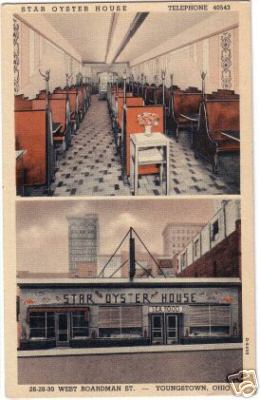
Star Oyster House


Star Oyster House had the best seafood in Youngstown according to this postcard. Located at 26-28-30 W. Boardman Street in downtown, it was also the oldest seafood place in town. Does anyone know when it closed?

Take me out to the ballgame...


This team represented The Ohio Works while playing in the Ohio-Penn League in 1906. Baseball is still strong in the Youngstown area, with the Minor League Mahoning Valley Scrapper playing not to far away in Niles.

Thursday, January 12, 2006

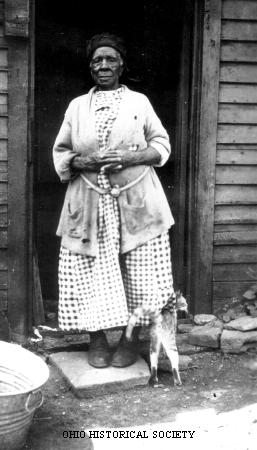
Former slaves in Youngstown

After the Civil War ended, many former slaves moved north in an attempt to find a place less critical of the color of their skin. Many chose to make Youngstown their home. It developing industry made it a place where jobs were often available to blacks at a time when they couldn't find jobs elsewhere. This woman here is an example of a former slave who made her home in Youngstown.

Wednesday, November 02, 2005

The Campbell Works, Youngstown Sheet and Tube


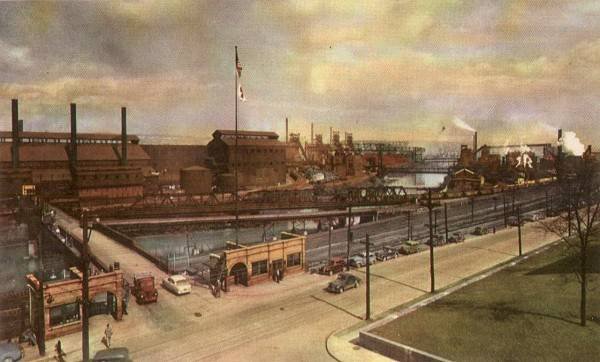
In November 1900, a group of 55 Youngstown citizens, led by James A. Campbell, raised $600,000 in capital to create the Youngstown Iron Sheet and Tube Company. Land was purchased along the Mahoning River approximately three miles east of downtown. In 1902, the mill opened for production.

Spectacular growth marked the company's second decade, some of it spurred by the demand for steel caused by World War I. In 1923, YS&T purchased the Brier Hill Steel Company of Youngstown and the Steel and Tube Company of America of East Chicago. During the 1930s the company survived the Great Depression and the 1937 "Little Steel" strike to emerge as a leading steel producer. In the 1960s, YS&T began to experience a decline. The company merged with the Lykes Corporation in 1969 and LTV Corporation in 1979, at which time all Youngstown operations were phased out.


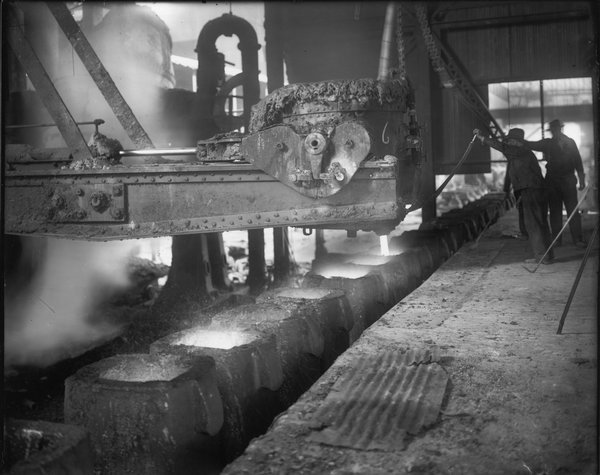
Youngstown Sheet and Tube workers pouring steel into molds (circa 1915).

Brier Hill


No neighborhood in Youngstown has more history behind it than Brier Hill. This Brier Hill image comes from the turn of the 20th Century, and features none other than the Brier Hill Meat Market, which I'm sure was a required stop for immigrants leaving the mills before making the evening's dinner.

St. John's Episcopal Church


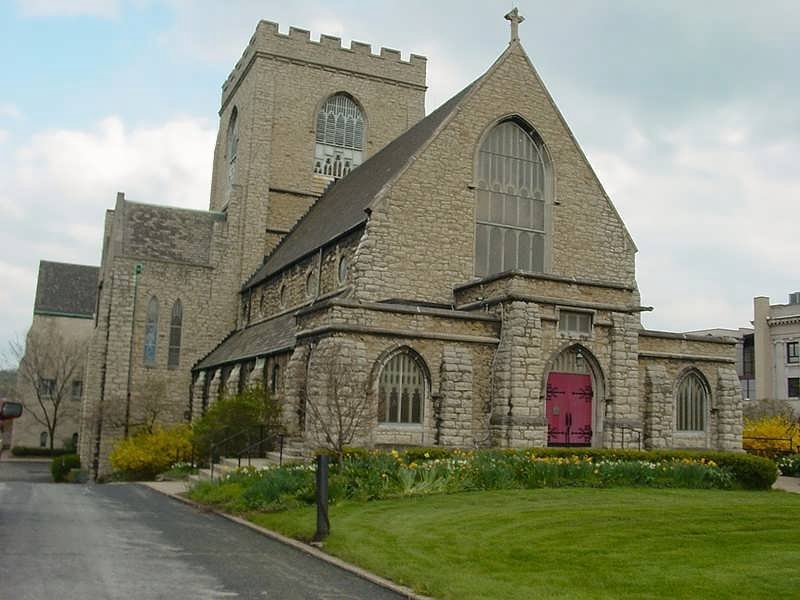
St. John's Episcopal Church was constructed in 1862. A great oral history of the church was compiled by YSU, as part of its ongoing oral history project. A link can be found here: http://www.maag.ysu.edu/oralhistory/cd1/OH1353.pdf

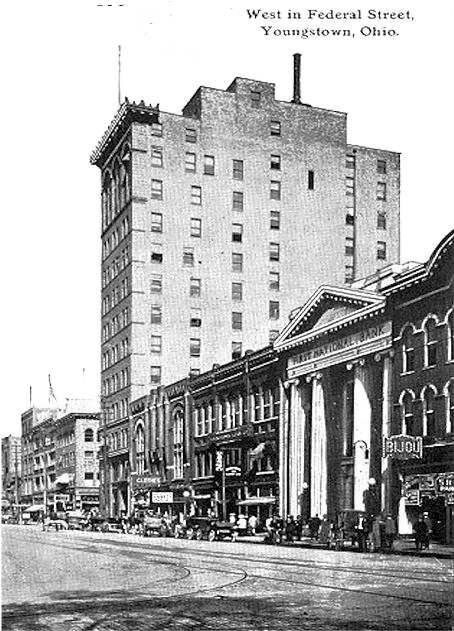
First National Bank on West Federal Street


This historic image of West Federal Street includes the First National Bank. It was probably taken around 1900.

Historic Banks of Youngstown


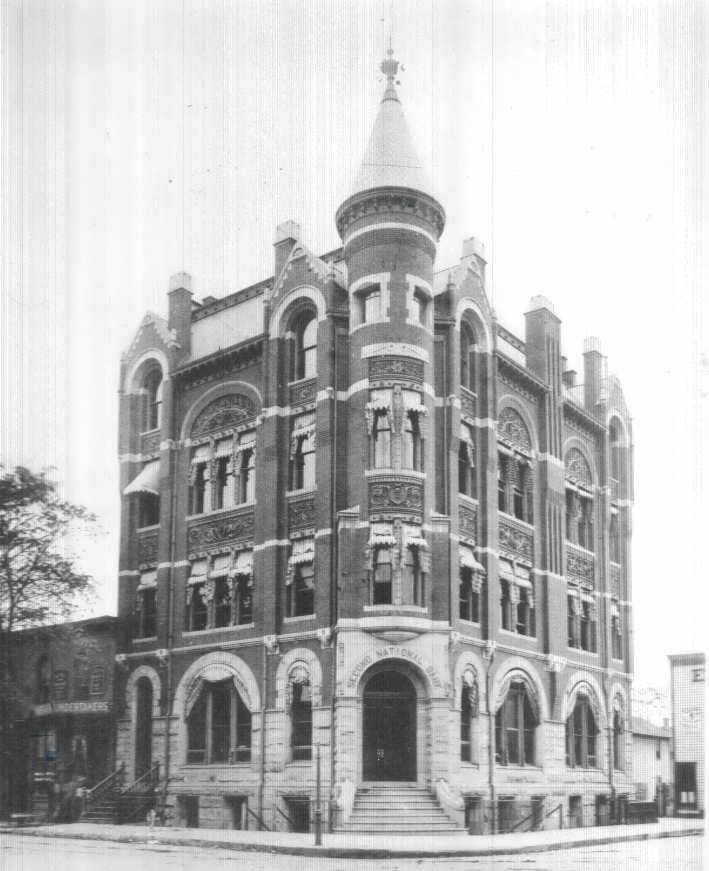
These two photos represent two very historic banks in Youngstown. The first is the Second National Bank and the second is the Dollar Bank. Both buildings were downtown on Federal Plaza.

Tuesday, November 01, 2005

Saturday, October 22, 2005

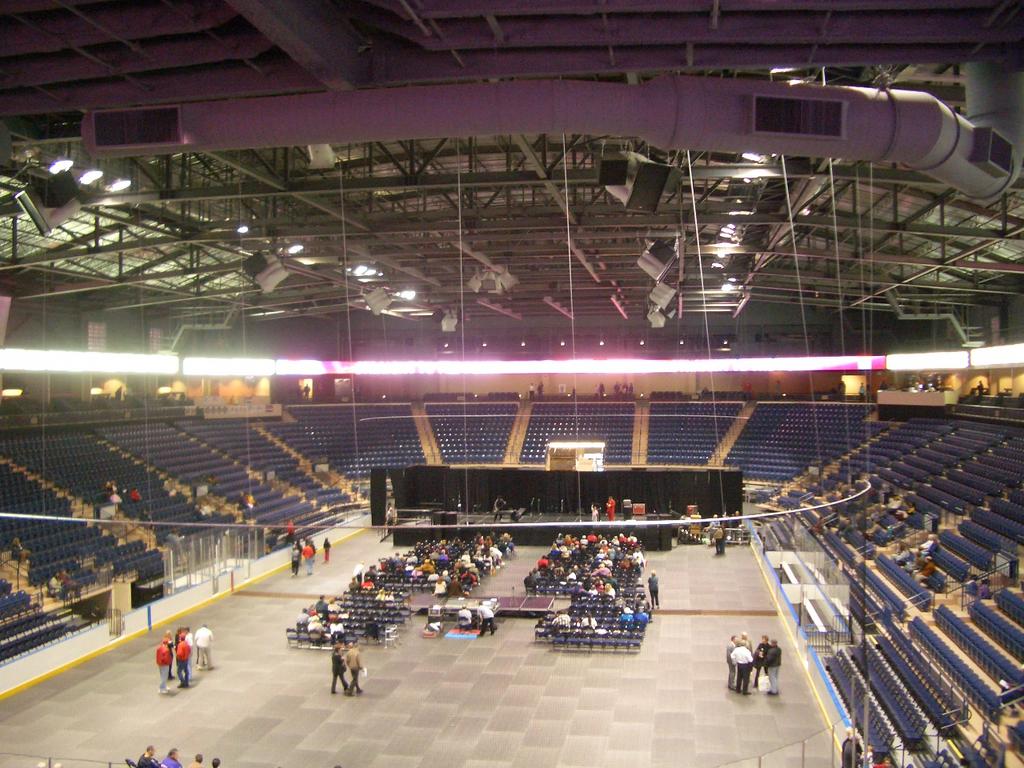
Youngstown Convocation Center Grand Opening Today!


Today I had the opportunity to tour the newly opened convocation center in downtown Youngstown! It is a fabulous building, and I think will create a lot of new entertainment options for the people of the area. Some large name music groups (Three Doors Down and Tomy Bennett, for example) are already signed up to play there within the nexy month or so. The Youngstown Steelhounds, a minor league hockey team, will also make the convocation center their home. They won their season opener today 3-2!

Thursday, September 29, 2005

It's time to go out and enjoy the nightlife in Youngstown

The Jambar - ae
Issue: 9/29/05

--------------------------------------------------------------------------------

It's time to go out and enjoy the nightlife in Youngstown
By Eric Grosso

Just a few years ago, not very many people in Youngstown mentioned 'fun' and 'downtown' in the same sentence. Over the last few months, the words have become a common phrase to describe a weekend here.

With the opening of new clubs, restaurants, stores and lounges, downtown Youngstown is in an area of growth: something that seemed impossible a short time ago.

The new spotlight of downtown is the $41-million-Youngstown Convocation Center. The center already has top acts booked, including 3 Doors Down, Tony Bennett, Barenaked Ladies and the Trans Siberian Orchestra. The 5,700-seat venue will also house Youngstown Steelhounds hockey starting in November and a possible Arena Football League team in the future.

Countless forms of entertainment are just a short distance away. Classic bars and restaurants combined with big city style dance clubs make for an interesting mix for Youngstown residents.

Cedar's Lounge one of the most notable venues, housing a restaurant serving Lebanese and American cuisine. Cedars also hosts local and national performers. Pittsburgh heavy rockers The Motorpsychos bring their rhythmic punk with The Blastoffs this Friday. Acclaimed artist BJ O'Malley will perform her unique style of alternative county rock on Saturday.

It's also home base for local musicians The Zou, who held the latest Nouveau Rock Festival at Cedars a few weeks ago, will hold their 4th annual Rocky Horror Halloween Party on Oct. 29.

Cedar's also houses DJ Martini on Sundays, spinning new and underground cult classics. Every Tuesday is jazz and blues night with Teddy Pantelas and swing dancing is held every Thursday.

Two of Youngstown's newest clubs, The Bad Apple and Skeeter's Jazz Bar and Grill, add to the variety of Federal Plaza. The Bad Apple offers the best selection of martinis and also offers live entertainment, while Skeeter's has numerous jazz events throughout the week.

The Core and the Cell are two of the area's best dance clubs, bringing big-city décor and styles to Youngstown. Sports fans can visit Buffalo Wild Wings, which shows numerous sporting events in screens throughout the facility in addition to serving some of the area's best wings.

The re-opening of Federal Street in December started the movement, allowing for traffic to pass conveniently through downtown and generating interest for the first time since 1973. The street's re-opening also saw a number of other additions, including the Bean Counter Café in 2003 and B and B's Unique Ladies Boutique in 2004.

Federal Street isn't the only place to be entertained. The Nyabinghi on Salt Springs Road is usually the center of underground music and entertainment. The venue has hosted groups from Columbus natives Red Wanting Blue to synth-pop brother duo Gil Mantera's Party Dream and numerous local acts.

Thursday at the Nyabinghi will see the Rebreather farewell show, while Friday the 'Binghi will host rock acts Posture Coach, Dramatic Ending and Sam Goodwill. You Are The War That I Want and Soiler will perform on Saturday.

Along with music, perhaps the most entertaining event in the valley in "Crapaoke" held every Wednesday at the Nyabinghi. This off-tune karaoke features a wider-variety song list and encourages performers to let it all hang out on stage: in short, it's not your normal karaoke, and that's a good thing. It also offers some of the best drink selection and prices in town and there's no cover charge for the fun on Wednesdays.

The former Jay Jay's, now known as Shenanigans, hosts a foam party every Monday just a few minutes away from YSU on Market Street.

For the sports fan, YSU Penguin Football starts its Gateway Conference schedule on Saturday at 6 p.m. against Illinois State. In addition to the food and drinks offered in the tailgate lot, Inner Circle Pizza and B&O Station are usually packed on game day. The Penguins are currently 3-1.

Youngstown, at least in the entertainment aspect, is going through a renaissance. Go out and enjoy it.

Thursday, June 16, 2005

N.E. Ohio is "haven" for wedding cookie tables!

The Mahoning Valley Historical Society has just opened a new exhibit entitled 'Mahoning Valley Weddings: Romance, Ritual and the Cookie Table.' My favorite aspect of the exhibit was this tidbit: The Mahoning Valley is a "haven" for the cookie table. Unknown to many areas throughout the country, this wedding tradition appears to be most popular in Northeast Ohio and Western Pennsylvania.

Check out http://www.mahoninghistory.org/Exhibits/mvwpics.stm for more information.

YSU made right decision for the Wick Pollock Inn

(editorial)
By The Jambar Editorial Board
Published: Thursday, June 16, 2005
Article Tools: Page 1 of 1

It may take a while longer for the Wick Pollock Inn to reopen, but Youngstown State University officials made the right decision to pull out of contract talks with Paran Management, the inn's potential developer.

From the start, the new plan to reopen the inn, which is located on the corner of Spring Street and Wick Avenue, didn't seem much better than the old plan that resulted in failure.

YSU first attempted to break into the hotel business in 1986. That year, the university leased the property for a period of 25 years to a partnership called the Pollock Inn Restoration Association. The partnership then took out a loan with First National Bank and converted the 14-room mansion into a 76-room inn.

Business wasn't exactly booming. In 1998, FNB foreclosed on the partnership, the inn shut its doors and the property has gone unused ever since. In September 2004, after a lengthy legal battle, FNB turned the remainder of the 25-year lease over to YSU in exchange for $500,000.

YSU, eager to reopen and renovate the fast deteriorating inn, solicited 22 companies for bids, but only Paran responded. The proposal Paran initially submitted to YSU bordered on insulting.

Paran asked for a 50-year lease, with YSU paying $250,000 up front to the company. After the inn was operational, Paran would pay the $250,000 back to YSU as well as a symbolic $1 per year rent for the property. Essentially, Paran was asking the university to give the property away for nothing.

University officials apparently were not able to negotiate a better deal, so they walked away - a smart decision.

Still, with every passing day, the inn falls deeper into disrepair. The building is a historic treasure and should not be subjected to such neglect. If university officials can't find a developer to overhaul the crumbling edifice, they should take the initiative and begin to renovate the building themselves.

In fact, YSU may ultimately be the best entity to run the Wick Pollock Inn. A former partner in the failed 1986 venture, Robert J. O'Malley, told the Jambar in October 2004 that for it to be a viable project, YSU needs to operate the inn itself.

"You don't need a major firm to come in and run it," O'Malley said. "You need to run it yourselves."

If the inn is capable of becoming profitable, why not reap the financial benefits? If the inn isn't capable of making money, no developer is going to want to come in and operate the place anyway.

It is questionable whether Youngstown's economy can even support a full service hotel again. However, if YSU uses the building as a learning tool for students in the hospitality management program, as has been mentioned in the past, with students staffing the inn, the venture could prove both financially and educationally profitable.

But time is money and the university needs to act fast before the historic Wick Pollock Inn deteriorates further.

Thursday, May 26, 2005

Youngstown's artist underground...

After the recent loss of the Youngstown Mattress Company Art Center due to a fire, I started to look into art galleries in Youngstown and found this one. Check out the site. I think you'll like it!

Tip Top Gallery

Friday, May 13, 2005

Youngstown Air Base Dodges BRAC List

Youngstown Air Base Dodges BRAC List
May 13, 2005 10:00 a.m.


YOUNGSTOWN, Ohio -- After holding their breaths for months, officials in the Mahoning Valley can now breathe a collective sigh of relief: The Youngstown Air Reserve Station is not among the names of military installations across the country the Pentagon plans to close, it was announced this morning.

U.S. Rep. Tim Ryan of Niles, D-17, made the announcement at a news conference downtown a few minutes ago. Now, the campaign begins to make sure the facility stays off the list and to explore ways to maintain or even expand the base.

“Ladies and gentlemen of the Mahoning Valley, we did it,” Ryan told an ethusiastic crowd, “we are not on the list.”

Ryan also said the air base is actually earmarked by the Pentagon to gain capacity. “We’re not eaxtly sure how many, whether that means planes or personnel, but the bottom line is we are not on the list,” he said.

Defense Secretary Donald Rumsfeld released the recommendation list this morning. The BRAC Commission will now review the list and submit its findings to President Bush by Sept. 8. During a Pentagon briefing yesterday, Rumsfeld had said the commission would close between 5% and 11% of excess infrastructure, for a cost savings $48.8 billion over the next 20 years.

Shortly after taking office in early 2003, Ryan formed Operation: Save Our Airbase Reservists, a public-private sector partnership dedicated to preserving the air base, which has a projected local economic impact in excess of $100 million. More than 1,400 Air Force reservists are based at the Vienna Township, which also employs more than 300 Air Force Reserve technicians and 190 civilian Defense Department employees. Nearly 300 Navy and Marine Corps reservists also are stationed there.

The Vienna Township base is home to the 910th Airlift Wing, which in wartime employs Lockheed C-130 Hercules aircraft in tactical airlift combat missions. Currently, 12 C-130s are stationed at the base. With the recommendations announced, SOAR’s efforts now turn to keeping the base off the final BRAC list.

The Business Journal Online will continue to follow this story throughout the day.

Monday, May 02, 2005

Going Once, Going Twice... Idora on the Auction Block

On October 20, 1984, after the turnstile had turned for the last time, Idora was put on the auction block. These photos were taken when the park was open to the public to view before they bid - a wake for a dead park.

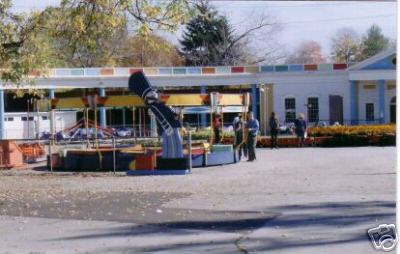
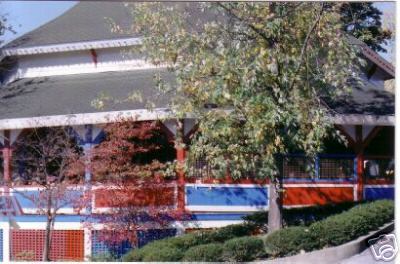
The World Famous Idora Park Carousel. This building was home to the P.T.C Carousel #61 installed at the park in 1922. The carousel building was one of the oldest structures at the park when it was demolished in September 1998. The Carousel itself was sold to a couple in New York City.


Who wants to buy Kiddie Land? It was up for auction when this photo was taken...


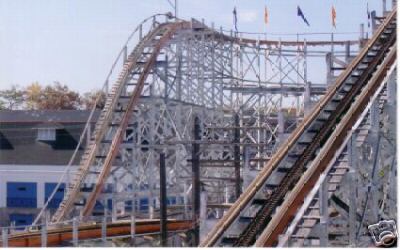
The Back Wabbit... aka The Jack Rabbit, depending on the direction of travel.
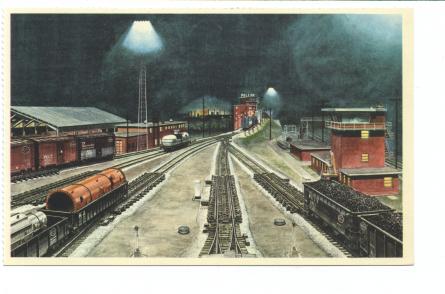
The Pittsburgh and Lake Erie (P&LE) Railroad Company yard in Youngstown.
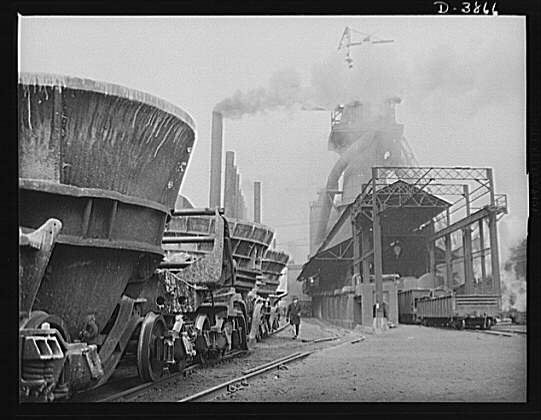
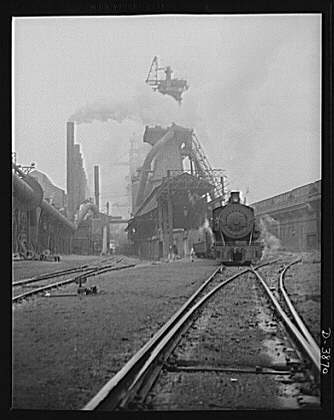
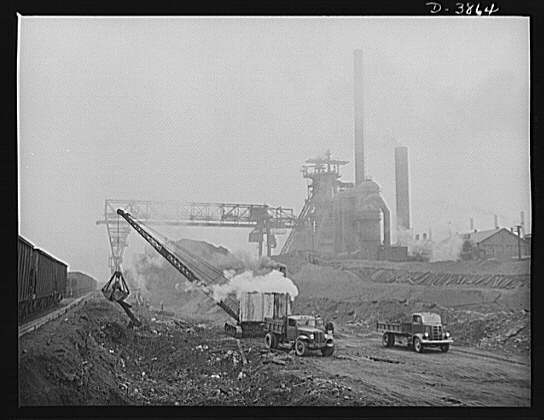
Republic Steel, Youngstown Works (Photo 4)
Republic Steel, Youngstown Works (Photo 3)
Republic Steel, Youngstown Works (Photo 2)
Republic Steel, Youngstown Works (Photo 1)
The Pollack Estate caretaker's house is on the right while the carriage house is on the left. These homes have been demolished.
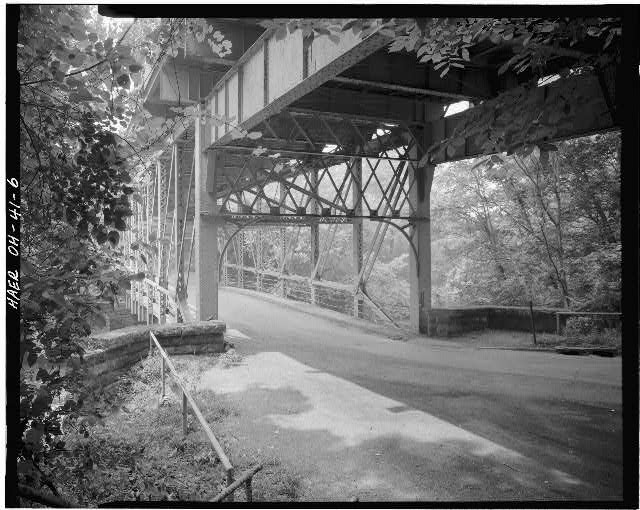
The Lower Road of the Mahoning Ave. Bridge in this 1984 picture. The Upper Road went down Mahoning while the lower road entered Mill Creek Park. This bridge was removed and replaced in the mid-1990's.

The Eagles Hall

According to the all-knowing Pat Lowry, the Eagles Hall was at the corner of Rayen Avenue and 5th Avenue and was torn down in the late 1980's.
The "Little Steel" strike in Youngstown left this police cruiser burned and upside down. These were some of the worst riots Youngstown and North East Ohio would ever see.
Downtown - The Consolidated Warehouse is now the Mahoning County jail.
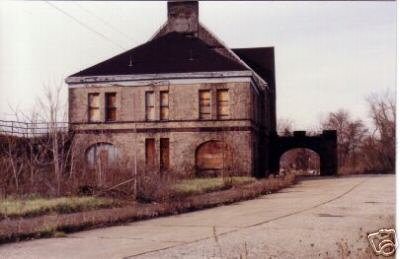
The B&O Railroad Depot has seen better days in this photo. Luckily, this building has been beautifully restored and is not quite as dead as it used to be - it just lacks rail service.

Tuesday, April 26, 2005

83-year-old patient charged for taking extra newspapers from box

By Harold Gwin, The Valley Voice

On his way to the hospital for cancer treatment March 16, Andy Fusco stopped at a Mahoning Avenue newspaper box to buy a copy of The Vindicator.

Fusco, who is 83-years old with failing hearing and sight, says he intended to take only a single copy of the 35-cent newspaper.

But The Vindicator claims Fusco actually took four newspapers and filed theft charges against the retired trucker. The charges carry a maximum fine of $1,000 and six months in jail.

Fusco, of Winchester Avenue, pleaded innocent of the charge before Youngstown Municipal Court Judge Elizabeth A. Kobly.

The retired trucker said the March 16 Vindicator edition was very thin and he didn’t realize he had taken more than a single copy from the box in front of the Brite & White Laundromat at 3212 Mahoning Ave.

He said it turned out that he had taken three papers after putting his money into the machine, not four as The Vindicator complaint against him claims.

“It was an honest mistake,” said Fusco’s younger brother, Frank, who accompanied him to court.

Whoever filed the charges against him “should be ashamed of themselves,” Frank Fusco said.

The police complaint against Fusco was signed by Amy Grant, transportation and single copy manager for The Vindicator. She was contacted about the alleged theft by Chris Thompson, a Brite & White employee, who collected a $200 reward.

Chris Thompson, who has worked at the laundry for eight years, said she first noticed Fusco appeared to be taking more than a single newspaper copy from the box right outside her office window about eight months ago.

She said she saw him stop and take papers from the box nearly every day she worked. Thompson said she finally decided to intervene because the laundry customers like to read the newspaper while doing their laundry and the box sold out too quickly.

She said she even took pictures of Fusco taking papers on more than one occasion.

Thompson said she alerted a Vindicator deliveryman and The Vindicator sent someone out to stake out the box and catch Fusco.

Fusco said a man from The Vindicator apparently followed him from the Mahoning Avenue Laundry to a store on Meridian Road where he stopped to buy two Cleveland Plain Dealers to take with him to the hospital.

The man demanded the newspapers and, not fully comprehending what the man wanted, Fusco said he tried to give him all of the papers he had, including the Plain Dealers.

The Vindicator filed a criminal complaint against Fusco the next day.

Frank Fusco said his older brother wasn’t trying to steal anything.

“He’s on borrowed time,” Frank Fusco said, explaining that his older brother is dying of cancer and lives on $700 a month in Social Security benefits.

Thompson said she didn’t know that she would be eligible for a reward from The Vindicator when she reported Fusco for theft.

“I do feel bad, because of his age and everything,” Thompson said.

Still, she wondered, what does it teach children if an older person gets away with theft?

Frank Fusco denied her allegation of repeated thefts by his brother.

“That isn’t true,” he said. “I know my brother. He’s not that type of guy.”

Calls to the city prosecutor’s office seeking comment on the case were not returned by press time.

New Downtown Candy Store Aims for Sweet Memories

Apr 20, 2005 8:00 a.m.

By George Nelson

YOUNGSTOWN, Ohio -- The sweet taste of nostalgia is for sale at a new downtown candy store operated by a nonprofit corporation that employs disabled adults.

The Touch The Moon Candy Saloon opened a week ago on Phelps Street next to City Hall. It is operated by Iron and String Life Enhancement Inc., which provides residential and respite services for mentally retarded and developmentally disabled children and adults.

“We decided we wanted to go with something fun and what's more fun than candy?” asks James F. Sutman Jr., ISLE owner and director.

Sutman said he wanted to start a business that primarily employs people with disabilities but would receive no government funding. The business would financially stand on its own, he continued, but at the same time “keep things lighthearted.”

ISLE also operates the Purple Cat downtown, a day program on Commerce Street where adults with disabilities produce unique crafts and art items.

The Candy Saloon stocks the kinds of confections typically found in any grocery store, but it specializes in offering selections familiar to baby boomers from their youth -- “what they call retro candies … that were really popular back in the '50s or '60s,” Sutman said.

The candy counter's nostalgic features include Beemans, Clove and Black Jack chewing gums, Swedish fish, candy necklaces, marshmallow candy cones, licorice pipes and Wack-O-Wax lips -- even BB Bats.

The Candy Saloon also sells Starbucks coffee as well as its own store blend, Velvet ice cream products, candy gift sets and sodas.

“We want to fill a niche,“ Sutman remarked. “It's going to take us several months to figure out what exactly the businessmen and women of Youngstown are looking for.”

The store fills special orders on request, he said, and places special emphasis on working with regional candy suppliers.

The Candy Saloon has 12 employees, including eight of whom who have some form of disability. Sutman said he always tries to have one non-disabled person working with a disabled person or, depending on the disability, sometimes two.

Sutman is encouraged by response from both employees and the community. “It has been a 100% success as far as my disabled clients are concerned, my disabled employees,” he said.

The store enjoys good foot traffic from workers at downtown employers such as InfoCision, the Mahoning County Department of Children Services and the Youngstown Police Department.

“The mayor's been in there five or six times,“ Sutman added.